
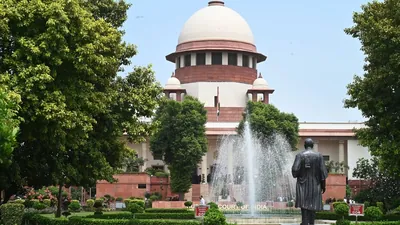
The right to access and use the internet is a fundamental right of every individual, including children irrespective of their age, the Supreme Court has held, cautioning that blanket restrictions on children’s internet access in the name of safety risk undermining their freedom, privacy and ability to seek help when they encounter online abuse.
“The safety of our children and their freedom are not at odds with each other. The court was examining measures to detect and remove child sexual exploitative and abuse material (CSEAM) from the internet when it turned to the growing international debate over restricting children’s access to social media. The court’s observations assume significance amid growing calls for governments to restrict children’s access to social media, including through minimum-age requirements. The bench held that such prohibitions were not only of questionable efficacy but could also prove counterproductive by driving children towards less regulated and potentially more dangerous online spaces. However, it had left open the question of whether access to the internet, in itself, constituted a fundamental right. “For many children, particularly in remote areas, it is often the only source of learning and information. Such restrictions, the court warned, could also discourage children who were being enticed, threatened or exploited online from reporting the incidents to their parents, guardians or other trusted adults for fear of being punished for having accessed the internet in the first place.
Our children are entitled to both,” a bench of justices JB Pardiwala and KV Chandran said in an order dated October 15, released now, holding that the right to access and use the internet flows from Article 21, read with the freedom of speech and expression guaranteed under Article 19(1)(a) of the Constitution. “We have no hesitation in saying that the right to access and use the internet is a fundamental right of every individual under Article 21 read with Article 19(1)(a) of the Constitution. In Anuradha Bhasin Vs Union of India (2020), the court recognised that freedom of speech and expression, as well as the freedom to carry on trade and business, could be exercised through the internet and were constitutionally protected.
Our children, irrespective of their age, enjoy the same rights, and to deny the same altogether would be as absurd as saying children below a certain age do not have a conscience worth protecting or a freedom of speech worth expressing,” it said. Likewise for children with special needs, the internet is often the only place where they are able to find company in others like them,” the court said.
The judgment traced the constitutional protection for digital access through earlier Supreme Court rulings.
