
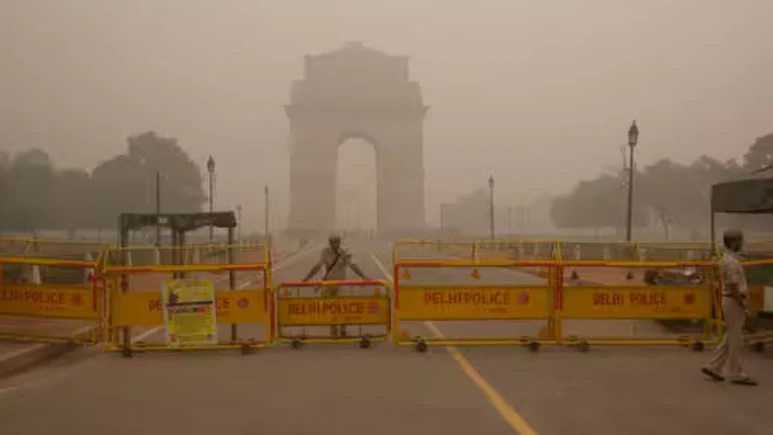
A slight nip in the air signals the changing season, but winter is yet to arrive in Delhi. Yet, the national capital’s air quality has deteriorated sharply over the past three days. Since Friday, Delhi’s Air Quality Index (AQI) more than doubled as dry weather and slower winds allowed pollutants to accumulate.
From 90 on Friday, the national capital’s AQI rose to 159 on Saturday and 187 on Sunday, according to Central Pollution Control Board (CPCB) data .
Delhi’s Environment Minister Manjinder Singh Sirsa said on Saturday that Delhi has recorded 211 days of good, satisfactory and moderate air quality so far this year, its best performance since 2016, except for the COVID-affected year 2020.
Twenty two monitoring locations across the city recorded poor air quality on Sunday, indicating that pollution levels were already elevated in several areas. Meanwhile, the temperature in Delhi and the national capital region (NCR) has fallen following the withdrawal of the monsoon. However, with no rainfall forecast over the coming week, air quality is expected to remain a concern.
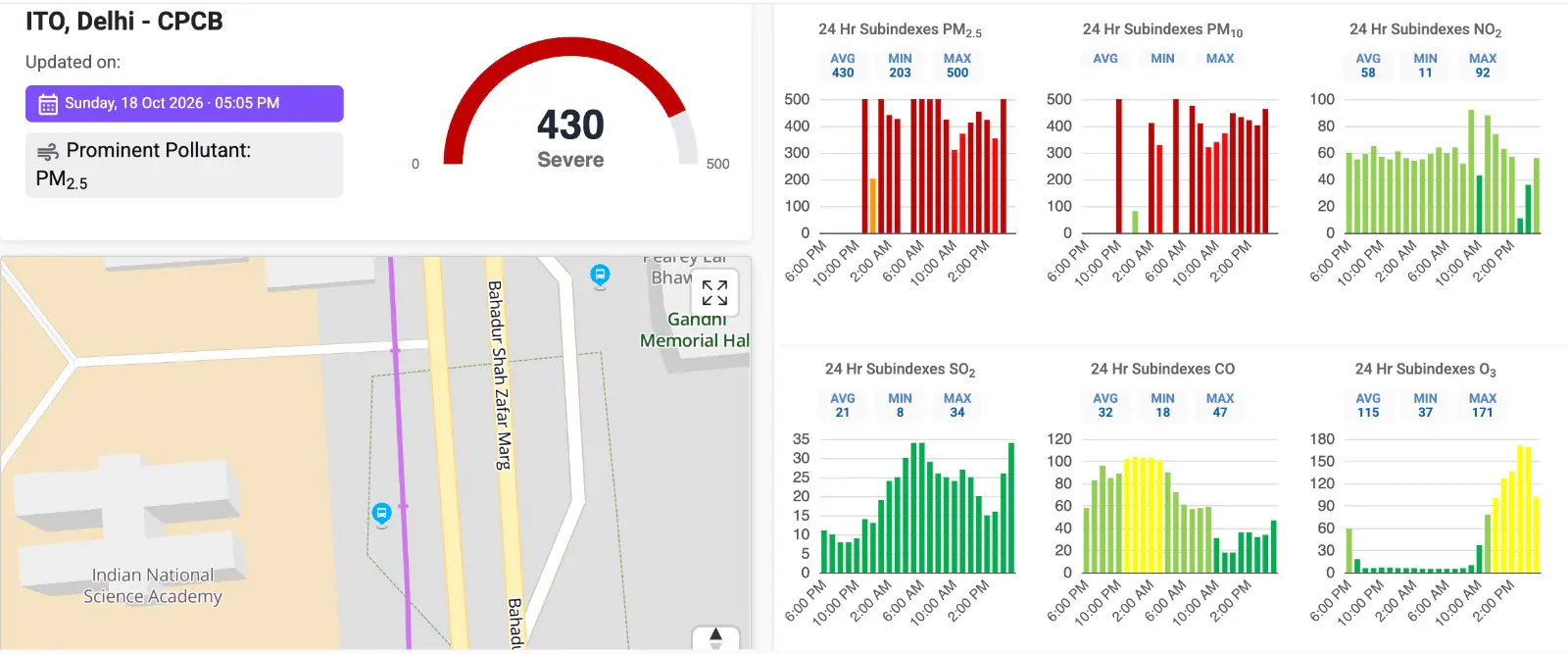
On Sunday, Delhi’s temperature settled at 17.1 degrees Celsius , 1.3 degrees below the season’s normal, the India Meteorological Department (IMD) said. The worst air quality of 430 was recorded at ITO, placing it in the severe category.
The immediate reasons include the absence of rain, slower wind speeds and emissions from local sources, including vehicles, road dust and construction activity. Rain and stronger winds can help disperse pollutants. As these conditions subside after the monsoon, emissions from everyday activities begin to accumulate closer to the ground. The changing weather also plays a role. As winter approaches, cooler temperatures, lower mixing heights and stagnant winds can make it harder for pollutants to disperse.
Delhi’s AQI at Delhi’s ITO station at 5 pm on October 1 was 132, according to CPCB data. In Jahangirpuri, the number stood at 216; for Punjabi Bagh, the same number was 178. In Anand Vihar, among Delhi’s most polluted points, the 5 pm AQI on October 1 was surprisingly 96. This shows that in the 18 days of this month, the air quality has deteriorated significantly – that too, just before the winter season.
