
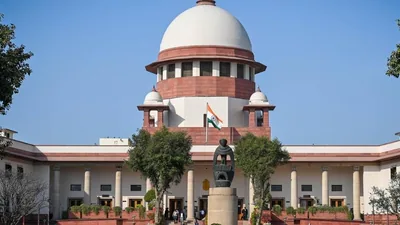
The Supreme Court has withdrawn its direction requiring trial and high courts to call for reports on aggravating and mitigating circumstances in every case involving an offence punishable with death, acknowledging that the exercise could prove unworkable in cases where the court does not even contemplate imposing capital punishment.
A three-judge bench of justices Vikram Nath, Sandeep Mehta and Aparesh Kumar Singh accepted a clarification plea by the National Legal Services Authority (NALSA) and deleted a key direction issued by the court on April 27, 2026, which had sought to institutionalise a comprehensive assessment of the circumstances surrounding both the crime and the offender before sentencing.
It highlighted the absence of a structured framework to assess the possibility of reform and called for a more informed, individualised approach to capital sentencing. The judgment also exposed how courts could be left to decide the question of life or death without adequate material about the person facing the sentence. In Manoj and others Vs State of Madhya Pradesh (2022), the Supreme Court underscored the need for a meaningful sentencing hearing and systematic collection of information about a convict’s background, mental health, family circumstances, social milieu and conduct in prison.
The court agreed with NALSA’s submission that requiring trial courts to obtain such reports in every death-eligible case could create procedural difficulties, particularly since they might not have the resources or facilities to undertake the extensive exercise. It also recognised that many such cases may not lead the trial court to consider a death sentence at all. The April order had required trial and high courts to call for reports on aggravating and mitigating circumstances as a matter of course once an accused was convicted, before determining the sentence. The direction was part of a wider set of measures aimed at ensuring that courts had a complete picture of the convict’s background and prospects of reform before deciding whether the death penalty was warranted. To be sure, the latest order, passed in a murder case from Bihar, does not delete the separate direction requiring high courts to call for such reports at the admission stage of a death reference if they have not been obtained or placed on record by the trial court. The other directions concerning comprehensive reports, dedicated legal teams for death-penalty cases and mitigation investigations also remain in place. The April directive was issued after the Supreme Court flagged a recurring failure to collect material on aggravating and mitigating circumstances at the trial stage or during the high court’s consideration of a death reference. It noted that such information was often sought only after the matter reached the Supreme Court, resulting in avoidable delays and undermining a meaningful assessment of the appropriate sentence.
