
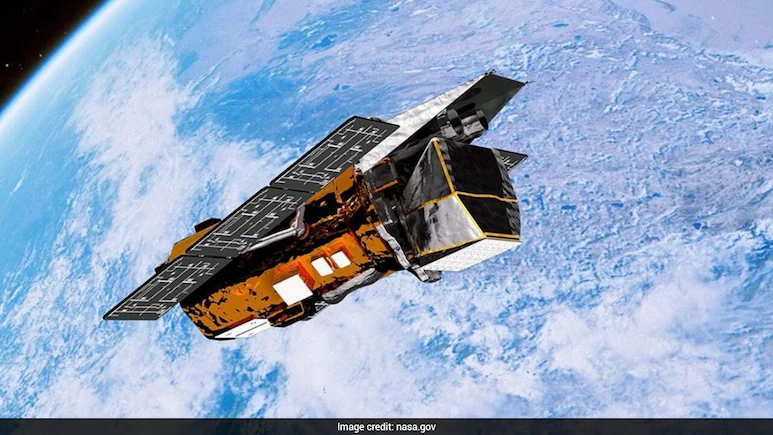
Its main job was to hunt down gamma-ray bursts-short, incredibly powerful flashes of energy deep in space. Thanks to its quick reflexes, Swift could rapidly swivel its cameras to catch these bursts and tip off other telescopes around the world for follow-up studies. NASA has officially called time on the Neil Gehrels Swift Observatory after nearly 22 years of tracking some of the most violent explosions in the universe. The telescope was launched back in November 2004, and was originally supposed to be a two-year run, but it has far exceeded expectations.
“Swift delivered an incredible, lasting return on investment for the nation, designed for a two-year primary mission but productive for more than 10 times as long,” Shawn Domagal-Goldman, director, Astrophysics Division at NASA Headquarters in Washington, said as quoted by NASA. “Swift was designed as a satellite dedicated to studying gamma-ray bursts, outbursts that came and went so quickly that no one could target them with large telescopes to learn more,” said S Bradley Cenko, the mission’s principal investigator at NASA’s Goddard Space Flight Center in Greenbelt, Maryland.
When it slipped below 171 miles in altitude in late October, it could no longer fight the drag and slipped into safe mode, prompting operators on the ground to send a final shutdown command.
After an attempted rescue and orbit-boost mission fell short earlier this year, the spacecraft began dropping rapidly.
“In that time, Swift played a major role in advancing our understanding of the changing universe and was part of a revolution in astrophysics that showed how critical rapid-response observations are to the entire community. To support rapid response to cosmic events in a post-Swift world, we’re exploring our ability to use and augment NASA’s fleet of existing space telescopes, from fast-to-orbit commercial capabilities to efficient, innovative new missions. And Swift leaves us with an extraordinary archive of multiwavelength observations that will fuel new discoveries for decades more. Swift is expected to safely re-enter Earth’s atmosphere in the coming weeks, leaving behind a massive public library of space images and a rich legacy of cosmic discoveries.
