
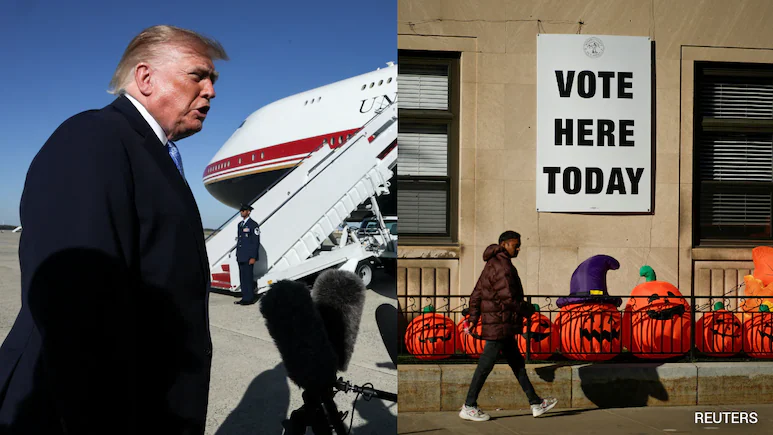
Americans go to the polls on November 3 for elections that will shape the final two years of Donald Trump’s presidency — although the president himself will not be on any ballot.
A Democratic takeover of either chamber would constrain Trump’s agenda and bring greater congressional scrutiny of his administration; Republican victories would preserve the party’s control in Washington. Democrats therefore need a net gain of four seats to reach the 51 required for control; a 50-50 tie would be broken by Republican Vice President JD Vance. 3: The net number of seats Democrats need to gain to take control. In 2024, Republicans won a 220-215 majority, although deaths, resignations and a party switch mean the current House stands at 218 Republicans, 214 Democrats, one independent and two vacancies. Republicans now hold a 53-47 advantage in the 100-seat chamber, counting two independents who vote with the Democrats.
The “midterms,” held halfway through a president’s four-year term, decide control of Congress as well as governorships and thousands of state-level offices.
53-41 percent: The Democratic advantage over Republicans among registered voters asked which party’s congressional candidate they would support, in a PBS News/NPR/Marist poll conducted September 14-15. The same survey found Democrats ahead among independent voters by 57 percent to 32 percent.
