
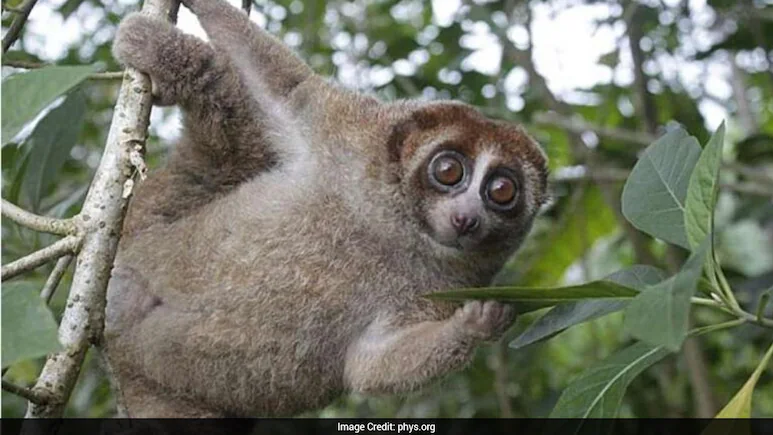
Some were found in backyards, beside roads and even on power lines, reported NYPost . A rare primate from Indonesia, known as the Bangka slow loris, has been rediscovered after nearly 89 years without being documented by scientists. Researchers found that more than 90 of these animals had been recorded in different parts of Bangka Island between 2015 and 2025.
The Bangka slow loris is a nocturnal animal that lives in trees and is found on the Indonesian islands of Bangka, Sumatra and Borneo. It is known for its large eyes and is one of the world’s only venomous primates. Researchers were surprised that the animal had remained unnoticed by scientists for so long despite living close to populated areas. He stressed the need for a long-term conservation strategy that includes research, surveys and habitat protection. scientists warn that it remains very close to extinction Although the discovery confirms that the Bangka slow loris still survives.
The discovery has surprised scientists, as the species was last documented in 1937 and was feared to be extinct, according to phys.org.
Study author Timon Glaw said the rediscovery offered hope that other species believed to be extinct might still survive in places that scientists had not studied for decades. Glaw said rediscovering the animal was only the first step towards protecting it.
