
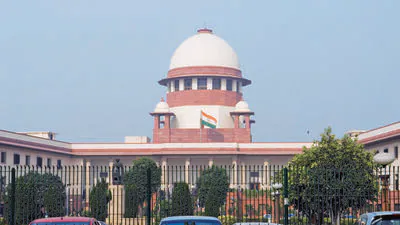
The Supreme Court on Tuesday stressed the need to strike a balance between citizens’ right to privacy and the media’s freedom to investigate and report, as it issued notice on a petition by the Digital News Publishers Association (DNPA) challenging provisions of the Digital Personal Data Protection (DPDP) Act, 2023, and the rules framed under it in 2025.
A bench, comprising Chief Justice of India (CJI) Surya Kant and Justices Joymalya Bagchi and V Mohana, also issued notice on the association’s interim prayer for a stay on the operation of the challenged provisions. “There will be rights of innocent citizens, and then there is your right. The bench reiterated that the competing rights would have to be reconciled. When Divan asked how journalists could report under the proposed framework, the court suggested the association might also explain how it would ensure that reporting did not infringe the rights of individuals. It has also argued that the Supreme Court’s recognition of privacy as a fundamental right does not justify a framework that leaves journalism without adequate constitutional safeguards. The government’s data protection framework is intended to regulate the processing of digital personal data and protect individuals against misuse of their information.
The court will hear the matter on November 17. The DNPA has maintained that the law threatens freedom of speech and expression under Article 19(1)(a) and the right to equality under Article 14, besides undermining the public’s right to information.
“You are the best person to suggest to the Union and us how you will ensure there is no misuse,” the bench told senior advocate Madhavi Divan, appearing for the DNPA, as it underlined that the privacy rights of ordinary citizens would have to be protected alongside the media’s constitutional freedoms. A balance has to be struck,” CJI Kant said. “News has to be new…what is the point if I have to ask for permission and consent?” she asked, warning that the framework could effectively introduce pre-censorship and leave newsrooms unable to pursue stories involving public officials and government offices.
The legal challenge places before the court the question of how those protections should operate when personal information is essential to reporting matters of public interest.
