
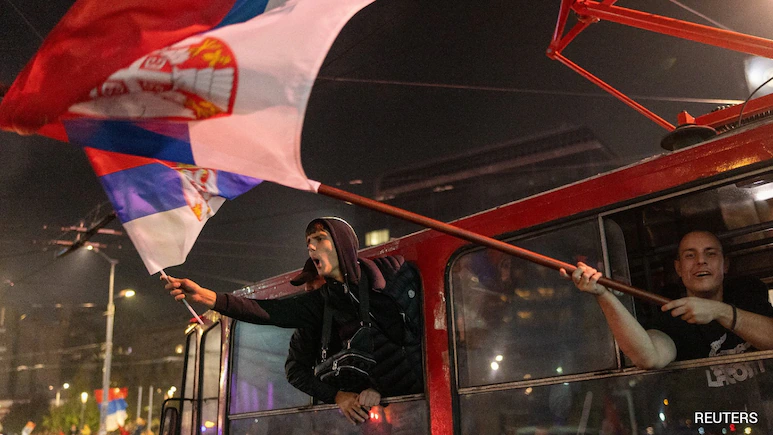
A cardiologist, a former central bank governor, a chemistry professor and a celebrated basketball star are among the figures who could enter Serbia’s parliament after a student-backed movement won a landmark election , ending Aleksandar Vucic’s 14-year dominance on the country’s politics. The movement, known as the Student List, has secured a projected 53 per cent of the vote, translating into 141 seats in Serbia’s 250-member parliament, according to the Centre for Free Elections and Democracy. Vucic’s Serbian Progressive Party won about 39 per cent, according to a report in The Guardian .
And in a striking twist, none of the candidates are actually students. They were selected by students who led a nationwide movement demanding accountability, transparency and an end to corruption. Ilija Srdanovic, a cardiologist and professor at the University of Novi Sad, heads the political movement. Radomir Saicic is a chemistry professor at the University of Belgrade and a member of the Serbian Academy of Sciences and Arts. The list also features Dejan Bodiroga, the former Serbian basketball star who is now president of EuroLeague Basketball, as well as sociologist Jovo Bakic, known for his criticism of the outgoing administration. Yet the movement has deliberately avoided putting a single leader at its centre. It has no publicly declared candidate for prime minister, leaving open the question of who will lead the government and how its members will share power.
More than 160 of its 250 candidates hold PhDs, according to The Guardian . Dejan Soskic, an economist, served as governor of Serbia’s central bank between 2010 and 2012.
However, bureaucratic resistance to reforms and the movement’s limited governing experience could make the transition challenging,” Teneo Global Research said in a report on Monday. In most parliamentary democracies, political parties select candidates through established party structures. Senior politicians, party leaders and experienced lawmakers usually occupy prominent positions, while election campaigns revolve around leadership, party ideology and policy promises. The students’ victory “is likely to trigger broad institutional and policy changes centred on anti-corruption, the rule of law, and better public services.
