
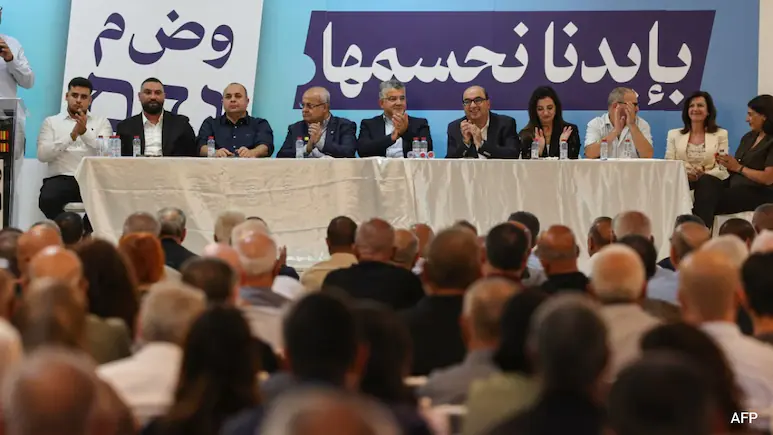
They cast ballots in national elections. They select the parliament’s legislators. They have even been key in determining who gets to be prime minister. But for much of the country’s history, Israel’s Arab parties have been on the fringes of power.
The Arab Party Joins the Government
In the recently concluded Israeli elections, neither Prime Minister Benjamin Netanyahu’s right-wing bloc nor the opposition won a clear majority, leaving Arab lawmakers to decide who will form the next government. Those lists won seats but had little independence from the Jewish-led parties that were behind them. But the story is much bigger than the maths of one election. It is a decades-long argument over Palestinian identity, equal citizenship and whether Arab representatives can wield real power in a state that defines itself as Jewish. In the first few decades of Israel, Arab representation was often through lists linked to Mapai, David Ben-Gurion’s leading party. For many, the deaths laid bare the limits of integration in a state that they felt had treated them unfairly. Distrust of police and government increased. Even voting patterns changed. Calls to boycott the elections caught fire, fanned by anger at government policy and a sense of the weakness of Arab representation. It united Hadash, Balad, Ta’al and Ra’am on a common platform, despite their differences over nationalism, religion and relations with Jewish-led parties. But seats alone did not mean power. The reliance on Arab lawmakers was politically contentious, and the effort never produced an alternative government. The episode highlighted a persistent issue: Arab parties could be kingmakers, but Jewish-led parties didn’t always consider them legitimate partners. It campaigned for money and policy changes on crime and violence in Arab communities, housing and planning problems and unequal access to public services. The critics feared that the participation in a government that was committed to Israel’s Jewish character would compromise Palestinian national rights. The experiment showed that an Arab party could go into government. It didn’t set the limits of how far such a party could cooperate with Jewish-led parties and still be true to itself. Ra’am indicated it would join a coalition in exchange for pledges on the needs of Arab citizens. Hadash and Ta’al have largely sought influence outside of government. Balad has adopted a more confrontational stance toward the Israeli mainstream. Any deal will depend on the final seat count, the parties’ conditions and whether a potential prime minister is willing to rely on their votes.
Arab citizens were under military administration until 1966, with their movement restricted. It averaged around 57 per cent over the four elections held between 2003 and 2013, compared with 66 per cent nationally. The Joint List was created before the 2015 election, as the need for unity gave birth to the list. In 2015, it won 13 seats. In March 2020, all four parties ran together again, took a record 15 seats, and became the third-largest faction in parliament. In 2020, the Joint List had recommended President Reuven Rivlin give Benny Gantz a chance to form a government. If neither bloc wins the 61 seats needed for a majority, Arab lawmakers could decide who governs.
Arab turnout, according to the Israel Democracy Institute, dropped dramatically. “Only by taking part could people improve their daily life,” said the supporters.
