
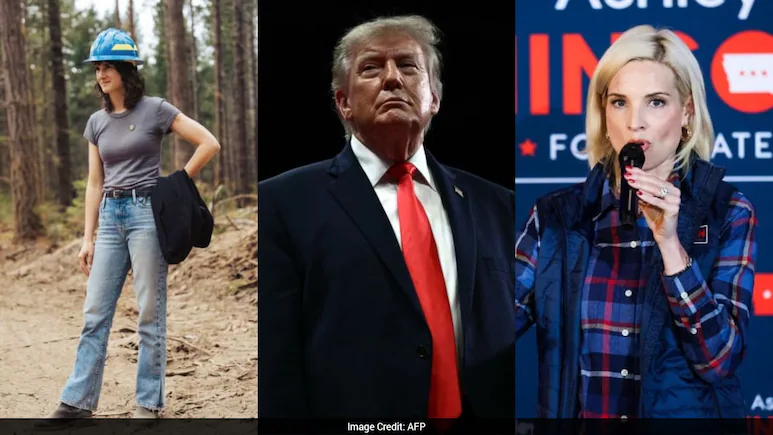
With social media playing a pivotal part in election strategy, the candidates are also increasingly focusing on their personal style to stand out from the crowded field of competitors. On November 3, American citizens will vote in the midterm elections, following months of extensive campaigning where leaders have attempted to make themselves relatable to the masses when it comes to crucial policy issues.
Unlike the rigid dress codes from the past, politicians are now dressing for two strategic reasons. The primary motive is to exude authority in holding office, while the secondary reason is to show the voters that they belong with them. Democrat Marie Gluesenkamp Perez, representing Washington’s 3rd Congressional District, has been one of the standout leaders this election season. The former car repair shop owner is often seen dressed in work jackets, flannel shirts, jeans, and practical footwear, helping her connect with the grounded voter base. “The necktie is dead on the campaign trail in both parties. In Michigan, Abdul El-Sayed, a Democrat candidate, is involved in a tight race against Mike Rogers, a Trump-backed former congressman. His power suit and red tie are now being replicated by his cabinet and many senators.
Perez, who won a Republican-held seat in 2022, is running for re-election, supporting small businesses and working families.
The younger man dresses up to look serious, and the older man dresses down to look like one of the guys,” Ordway said. Apart from his public rallies, El-Sayed has caught social media’s attention for wearing a black V-neck T-shirt and blue jeans, which he calls “minimal look, maximal politics,” throughout the campaign trail Friedman said President Donald Trump remains the master of this approach.
