
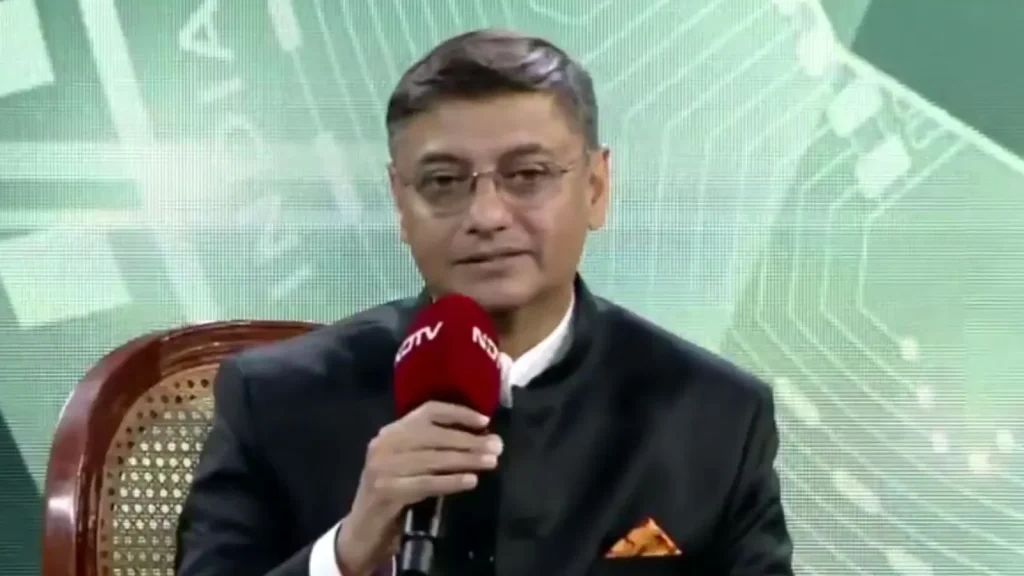
As the tricolour rose across the country on Independence Day, the conversation around India’s journey ended up, as always, in a debate. On one side, restless Gen Z people chasing start-ups and global opportunity. On the other, a louder, more insistent national debate about shedding the country’s colonial hangover. Sanjeev Sanyal, a member of the Prime Minister’s Economic Advisory Council and a historian, believes these are not two separate conversations at all.
His prescription, instead, is what he called flexibility and optionality — building a system resilient enough to absorb shocks, whichever way they come. He extended this logic to India’s foreign policy, where the country sits simultaneously in the G20, the Quad, at G7 tables as an invitee, and within BRICS.
The same principle, he said, drives India’s expanding web of free-trade agreements.
The second is certification. Sanyal pointed out that Indian industry — and even the Indian government itself — routinely demands foreign certification for products and processes where India has never built its own equivalent systems, something even Thailand, he noted pointedly, has managed to do. On the numbers, Sanyal noted India is now the third-largest economy in the world by purchasing power parity, contributing close to 8 per cent of global output, and the fifth-largest in current dollar terms at roughly $4.2 trillion — just behind Japan, and currently the fastest-growing major economy. Asked what single policy shift could unlock the scale of wealth creation India aspires to — tracing the arc from the scarcity of the post-1947 decades, through the licence raj of the 1970s and 80s, to today’s top-three global economy ambitions — Sanyal was unequivocal that no such single lever exists.
But he was quick to temper the optimism: divide that economy by the world’s largest population, and India remains, in per capita terms, a fairly poor country — which is why, he said, safety nets have to be built even as the country tries to climb.
