
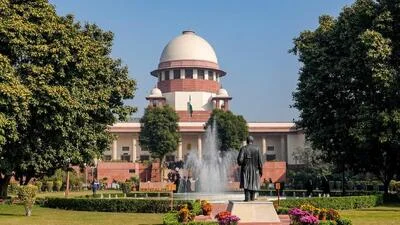
The Supreme Court has instructed the Karnataka government to adhere to the directives issued by the Cauvery Water Management Authority (CWMA) regarding the release of water to Tamil Nadu. This decision, made on Monday, includes a one-week wait to evaluate whether Karnataka continues to comply with the water-sharing order. Currently, Tamil Nadu has sufficient water resources, and immediate intervention is not deemed necessary.
A bench of justices Vikram Nath and Sandeep Mehta fixed the matter for hearing after a week, seeking an updated status on the release of Cauvery water by Karnataka. The bench was hearing Tamil Nadu’s plea seeking implementation of the CWMA’s decision directing Karnataka to release water to the state.
Senior advocate CS Vaidyanathan, appearing for Tamil Nadu, told the court that Karnataka was not complying with the authority’s directions and that Tamil Nadu was “not seeing the water”, leaving it unable to release water to farmers.
It sought directions to ensure that the stipulated flow reached the inter-state border at Biligundlu and that Karnataka made good the accumulated shortfall. Because god has been kind and flow has come, “We are not releasing any water, it is. As of this morning it has exceeded 12,000 and those gates have been opened,” Divan maintained. Tamil Nadu approached the Supreme Court alleging that Karnataka had willfully failed to comply even with the earlier direction to release 3,500 cusecs a day from July 29. Karnataka, in a reply filed before the court, disputed Tamil Nadu’s calculation of a shortfall and said it in fact released substantially more water than mandated between July 29 and August 10.
He assured the court that Karnataka would endeavour to maintain the 12,000-cusecs flow directed by the CWMA, though it would be “very difficult” for the state. Divan also submitted that two expert bodies applied their minds to the issue and issued directions and, therefore, the role of the Supreme Court should be “very minimal”.
