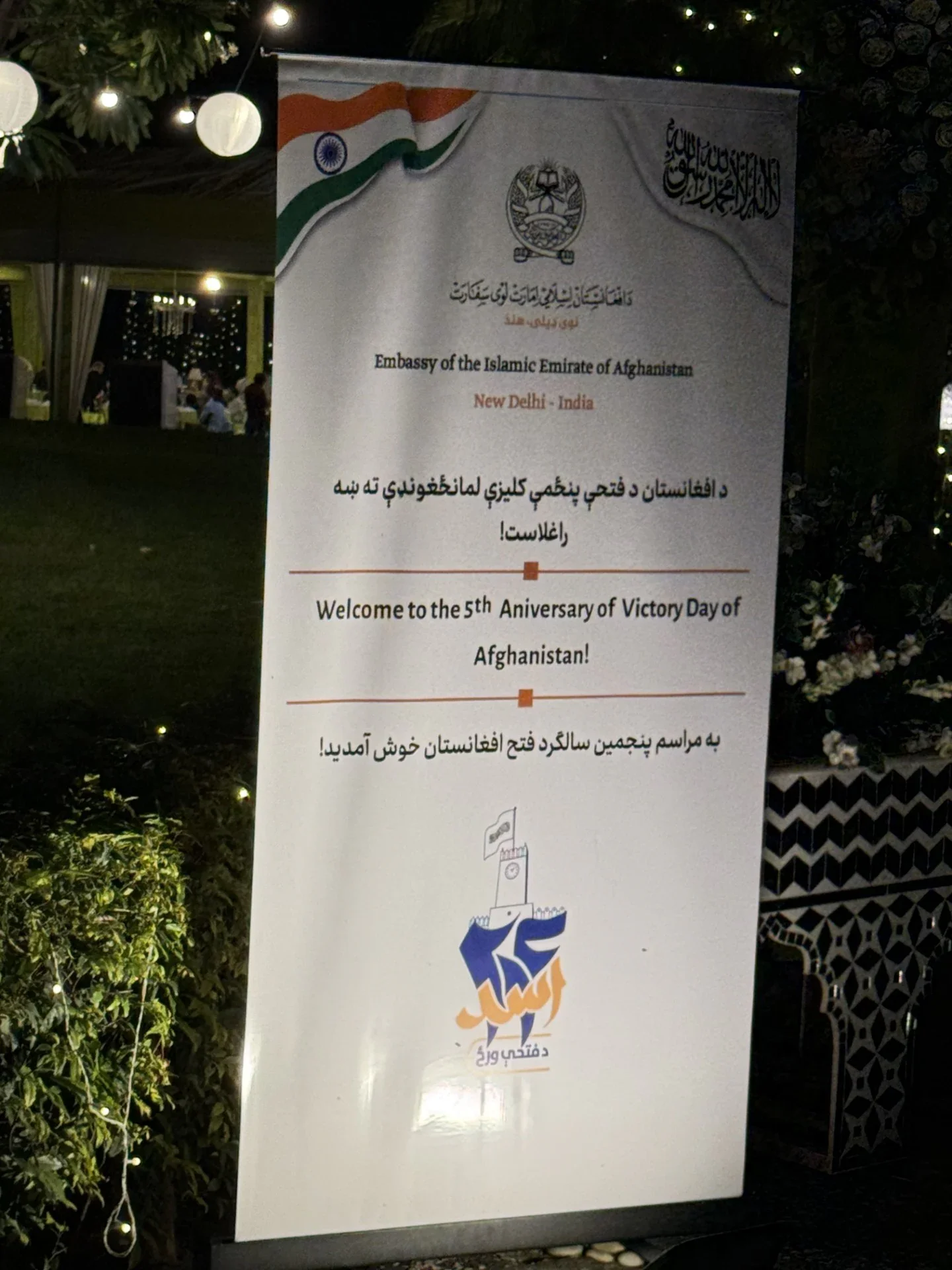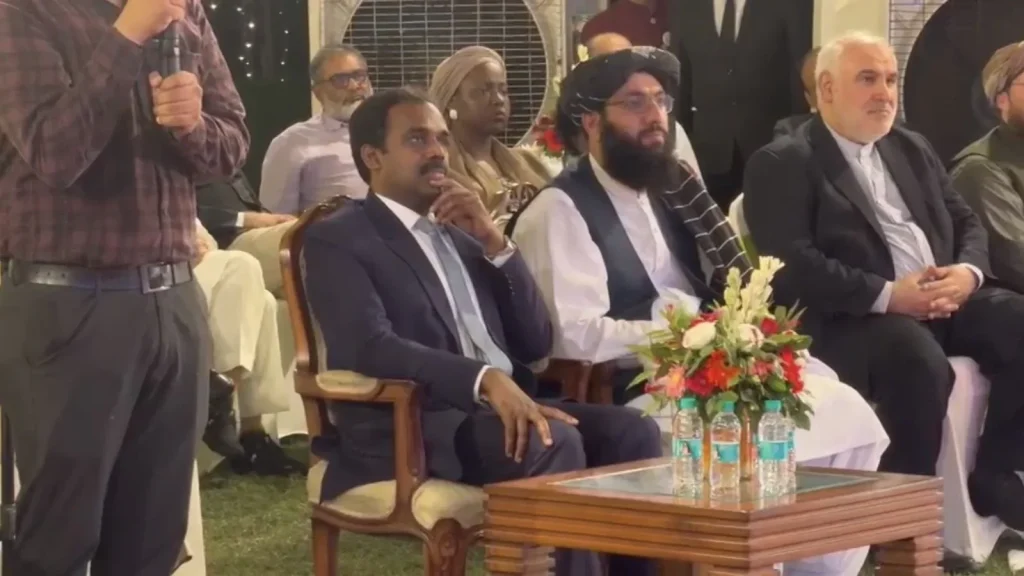
Mufti Noor Ahmad Noor, the Taliban-appointed Chargé d’Affaires at the Afghan Embassy in New Delhi, used the occasion of the fifth anniversary of the Taliban’s return to power to deliver a wide-ranging address on Monday celebrating Afghanistan’s “stability” and calling for deeper engagement with India, even as Kabul’s relationship with Islamabad continues to deteriorate into open conflict.
Addressing an audience that included Dr. Much of the speech was devoted to the Taliban government’s record over the past five years. Noor framed Afghanistan’s geography as central to its foreign policy vision, declaring that “Afghanistan’s geography should not be a field for negative competition, but rather a bridge for connectivity, cooperation and shared prosperity. He specifically referenced recent visits by Afghanistan’s Foreign Minister and other sectoral ministers to India, adding that “the two countries have reached understandings in various areas. He expressed gratitude to Indian Foreign Minister Dr.
Anand Prakash, Joint Secretary in India’s Ministry of External Affairs and the event’s chief guest, along with numerous foreign diplomats, Noor described August 15, the 24th of Asad by the Afghan calendar, as more than “the anniversary of a political transformation.
Noor credited the administration with “the implementation of the sacred Sharia, the strengthening of the country’s security and independent decision-making,” and argued this security serves not just Afghans but “the shared interests of the region and the world. A “peaceful, stable and responsible Afghanistan,” he said, “creates new opportunities for regional connectivity, trade, investment and economic cooperation. On the economic front, Noor pointed to efforts including “managing government affairs through domestic revenues, developing infrastructure, strengthening transport corridors, investment in the energy, mining and agricultural sectors,” and highlighted progress on the TAPI gas pipeline and the CASA-1000 electricity transmission project as “important foundations for Afghanistan’s economic growth and regional connectivity. He also cited “administrative reforms,” anti-corruption measures, and efforts to combat narcotics cultivation and trafficking as steps meant to “improve the quality of governance and further strengthen public confidence. He described the country’s foreign policy as resting on “balanced engagement, mutual respect, non-interference and shared interests,” and said Afghanistan seeks “positive, constructive, pragmatic and sustainable relations with all countries. Turning to recent diplomacy, Noor said bilateral ties have seen “significant progress, guided by mutual respect, political engagement, and shared interests,” pointing to expanded embassies and consulates and continued high-level exchanges. S Jaishankar “for their support in protecting and respecting the international rights of the Islamic Emirate of Afghanistan,” and voiced hope for “greater attention and practical efforts” from India on Afghanistan’s international standing. India still does not formally recognise the Taliban government, only Russia has done so but analysts note the normalisation of “structured, though carefully calibrated” engagement, even as an Afghan opposition group, the National Resistance Council, has criticised the embassy handover as “contrary to the ground realities in Afghanistan.”
Since then, Kabul has sent its Commerce and Health ministers to Delhi for talks on trade and pharmaceuticals, while India has continued humanitarian and medical assistance.