
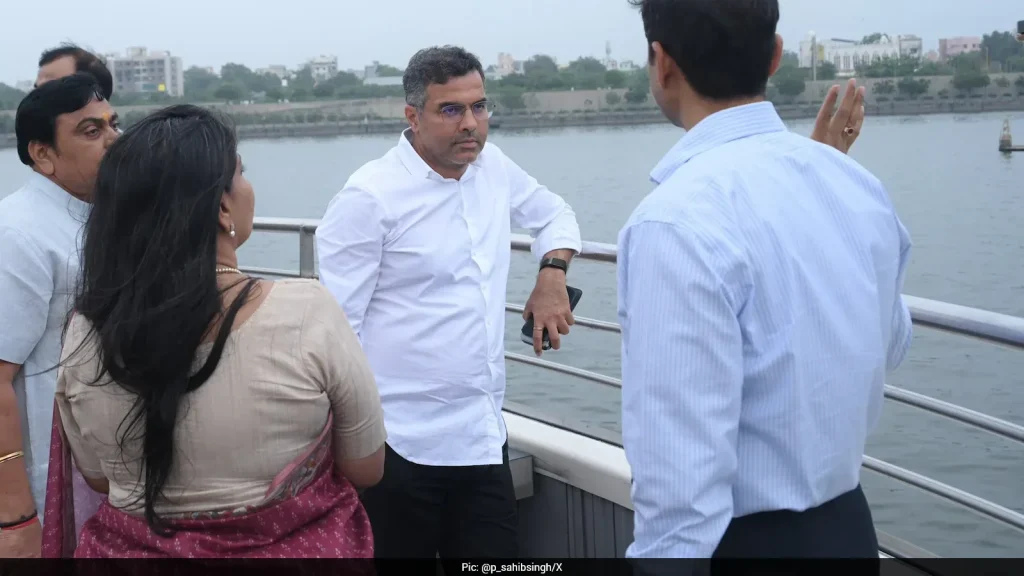
Delhi Deputy Chief Minister Parvesh Verma announced on Monday that the Delhi government intends to implement an urban rejuvenation project along the Yamuna Riverfront, drawing inspiration from the successful Sabarmati Riverfront model in Ahmedabad. This initiative aims to enhance the city’s waterfront, promoting both environmental sustainability and urban development.
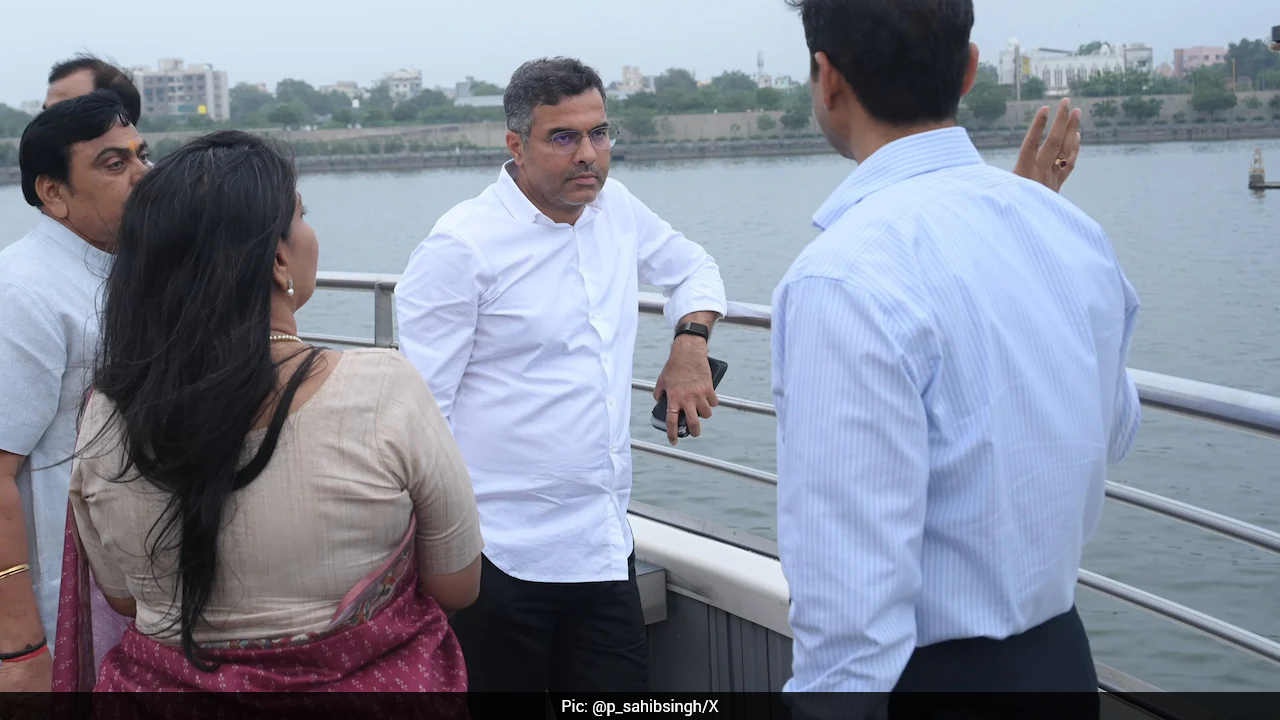
Addressing financial accountability and past failures in cleaning the Yamuna, the Deputy Chief Minister revealed that the government is preparing to take strict legal action against those responsible for financial irregularities under previous administrations. “The Comptroller and Auditor General raised severe questions about hundreds of crores spent on sewage treatment plants that either never operated or ran far below capacity. We have sent the CAG findings to the committee, and as soon as the report is submitted, we will start filing FIRs against those responsible. Reassuring the vast Purvanchali community living in the national capital, the Deputy Chief Minister affirmed that dedicated Chhath Ghats are being prioritised. To stop direct pollutant discharge into the river, the Delhi government is rolling out new schemes to handle dairy waste and septage from domestic septic tanks. Verma noted that lessons learned from Ahmedabad—such as relocating traditional washermen to fully mechanized dhobi ghats—will be implemented along the Yamuna. “We observed how washermen here were relocated to a modern, mechanized dhobi ghat facility to stop direct sewage runoff into the river. We plan to build similar dedicated facilities for Delhi’s washermen to prevent untreated runoff from polluting the Yamuna,” Verma added. He assured that the government plans to construct lush green parks, cycling tracks, state-of-the-art ghats, recreational spots, and sports grounds along the banks of the river.
He highlighted that the government has recently approved a fund of 60 crore for constructing a grand, modern Chhath Ghat at Kalindi Kunj (Kalka Ji Kunj area), set to be completed within a year while parallel work continues to restore the river’s flow and purity. Highlighting Prime Minister Narendra Modi’s vision and guidance, Verma emphasized that around 90 percent of the environmental and infrastructural issues faced by the Sabarmati Riverfront 25 to 30 years ago match the problems plaguing the Yamuna today.
“We already have one CAG report and are awaiting another report regarding the Delhi Jal Board’s expenditures,” Verma said. “Unlike previous governments that banned Chhath rituals on the Yamuna, our administration facilitated grand celebrations last year, allowing nearly ten lakh devotees to offer prayers safely,” Verma said. “With the support and blessing of Prime Minister Modi and under the guidance of our Chief Minister, we are determined to build a Sabarmati-like riverfront along the Yamuna in Delhi very soon,” Verma stated.
