
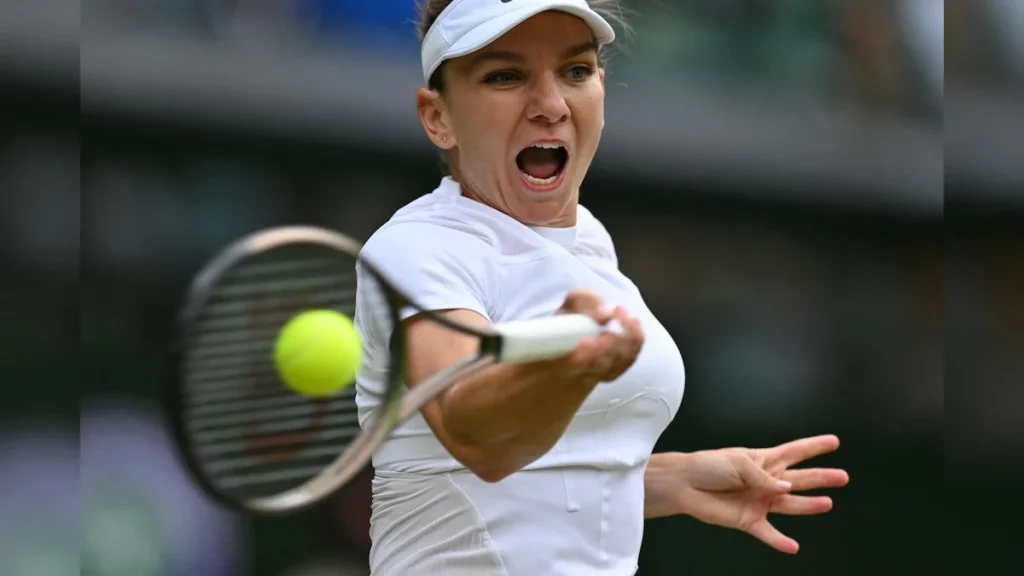
The Court of Arbitration for Sport (CAS) on Tuesday reduced the four-year doping ban imposed on Romania’s former world number one Simona Halep to nine months, which have already been served. However, after Tuesday’s CAS ruling she is now free to resume her career immediately. “My faith in the process was tested by the scandalous accusations that were leveled against me, and by the seemingly unlimited resources that were aligned against me. But in the end, the truth prevailed, even if it took much longer than I wish it had.”
The 32-year-old was suspended for four years last September by the International Tennis Integrity Agency (ITIA) after two separate doping infractions the previous year.
“Throughout this long and difficult process, I have maintained my belief that the truth would eventually come out, and that a just decision would be reached, because I am and always have been a clean athlete,” Halep said in a statement.
“Having carefully considered all the evidence put before it, the CAS Panel determined that Ms. Halep had established, on the balance of probabilities, that the Roxadustat entered her body through the consumption of a contaminated supplement which she had used in the days shortly before 29 August 2022 and that the Roxadustat, as detected in her sample, came from that contaminated product,” CAS said.
“The CAS Panel has unanimously determined that the four-year period of ineligibility imposed by the ITF Independent Tribunal is to be reduced to a period of ineligibility of nine months starting on 7 October 2022, which period expired on 6 July 2023,” CAS said in a statement Tuesday.
Concerning Halep’s biological passport, CAS took into account “the results of a private blood sample given by Ms.
In its ruling the ITIA had “admitted the argument of taking a contaminated food supplement put forward by Halep”, but “determined that the concentration of Roxadustat found in the positive sample could not result from the quantity ingested by the player” – a reasoning invalidated on Tuesday by CAS. Halep on 9 September 2022 in the context of a surgery which occurred shortly thereafter” judging that these elements made “the doping scenarios put forward by the ITIA” implausible. “An essential element of the anti-doping process is a player’s ability to appeal, and the ITIA respects both their right to do so, and the outcome,” said ITIA chief executive officer Karen Moorhouse.
