
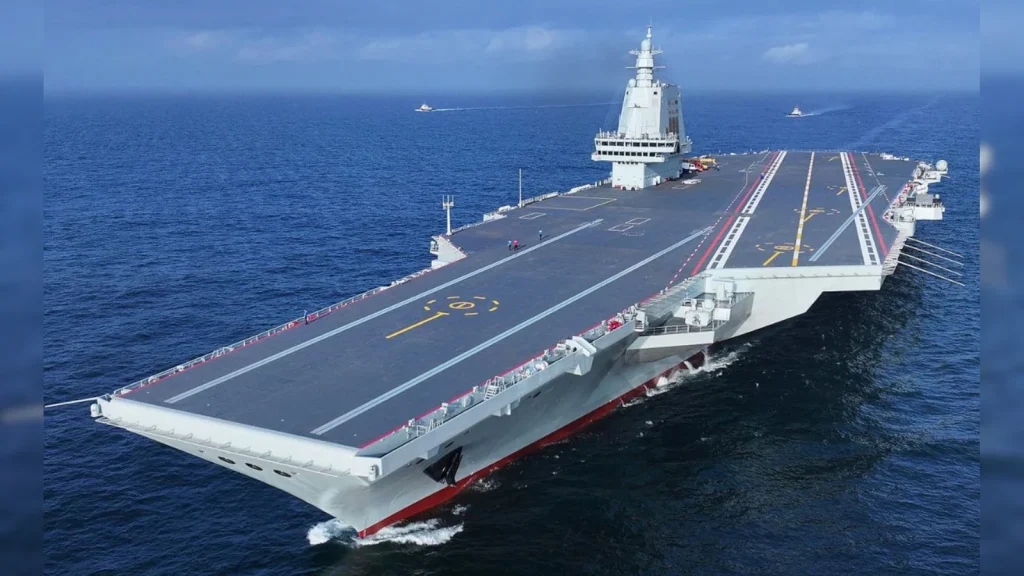
China’s naval transformation is increasingly becoming a story not merely of ships and aircraft, but of the human capital required to operate them. It is now constructing a permanent, multi-source recruitment and training system designed to generate carrier aviators at scale. This is an important indicator of the seriousness with which Beijing views carrier power.
The People’s Liberation Army Navy (PLAN) has moved beyond its earlier dependence on a small pool of experienced pilots who could be converted for carrier operations.

China has also begun recruiting university graduates directly for naval aviation and has introduced female carrier-pilot cadets. The PLAN has developed a dual-track model. Chinese officials have explicitly described this as a dual-track system combining experienced pilots with high-school recruits. The recruitment pool has subsequently widened. It now includes high-school graduates, students from naval aviation schools, university graduates in science and engineering, and other military and civilian candidates. The logic is clear. Carrier aviation cannot remain dependent on a handful of pioneers. A growing carrier fleet requires a predictable manpower pipeline that can produce pilots, instructors, and, eventually, commanders in sufficient numbers. The latter is symbolically important, but its broader significance is the widening of the recruitment base at a time when demographic pressures make access to technically capable young people increasingly important.
Alongside this, China has since 2019 increasingly recruited young people directly for carrier aviation, allowing them to be trained from the beginning for the demands of shipborne flying.
The earlier approach involved taking experienced naval aviators and retraining them for carrier operations.
