
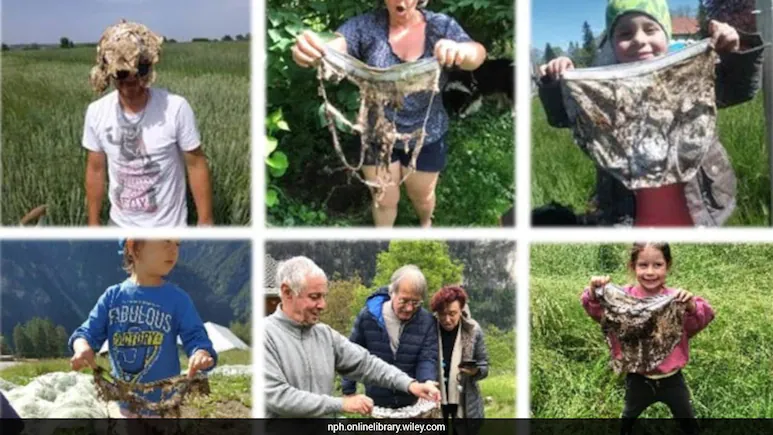
Soil grows our food, holds water, carbon and nutrients, and is home to over half of all life on Earth. Yet soil biodiversity is falling worldwide, putting farming, food security and healthy ecosystems at risk. Its aim was to raise awareness and collect scientific data. After two months, they dug them up, photographed them and sent them to the lab with soil samples for testing.
To explore this hidden world, researchers from the University of Zurich and Agroscope, Switzerland’s centre for agricultural research, started a citizen science project in 2021 called Proof by Underpants. Using the same method, 1,000 volunteers buried more than 2,000 pairs of cotton pants and 12,000 tea bags at about 1,000 sites across Switzerland.
The findings, published in Plants, People, Planet, produced a broad map of biological activity in Swiss soils. Researchers found that the cotton underwear broke down at very different speeds depending on where it was buried. “Healthy, biologically active soil is crucial for fertility, nutrient cycling and many other ecosystem services. Among the factors studied, land use had the strongest influence on how quickly the underwear decomposed. Whether a location was a garden, meadow, cultivated field or lawn explained differences in decomposition better than most of the soil characteristics the researchers measured. When that happens, gardeners may want to consider whether they are using too much fertilizer. Biological activity in soil is also strongly influenced by temperature and moisture. If the ground becomes too cold or too dry, soil organisms become far less active.
“Our results show that how soil is managed can significantly affect both soil life and soil quality,” says co-study leader Marcel van der Heijden, UZH professor of agroecology. “However, maximum decomposition is not desirable in every ecosystem,” says co-project leader Franz Bender, head of the agroecological assessments team at Agroscope.
