

Politics, like Indian family gatherings, has its customary characters.
There is the enthusiastic cousin, the know-it-all uncle, and, occasionally, the eternally displeased uncle who asks, “But why is this necessary?”
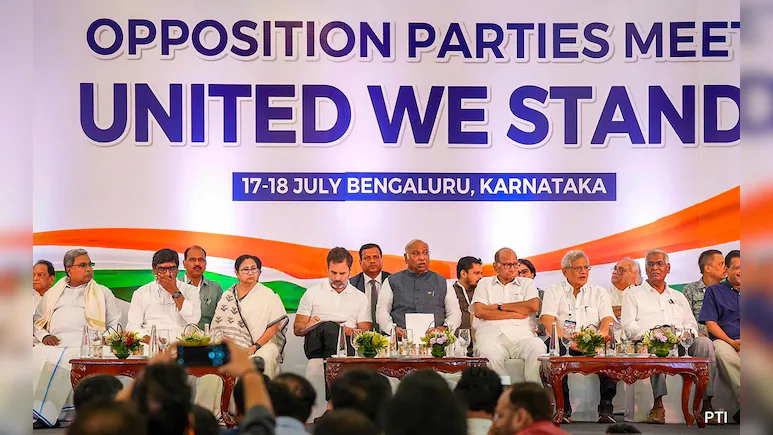
Prime Minister Narendra Modi has now given this familiar Indian family character a political identity – the ‘naraaz fufa’ (Fufaji is father’s sister’s husband) – the commonly attention-seeking uncle in most Indian weddings and functions. Speaking at the centenary celebrations of SRCC (Shri Ram College of Commerce), Delhi University recently, PM Modi contrasted those who convert social energy into nation-building with those who oppose every new initiative by asking: what is the need for this? As examples, PM Modi mentioned projects and initiatives ranging from the Statue of Unity and the bullet train to UPI, the new Parliament building, and a memorial for fallen soldiers, etc – all initiated by his government. There is no doubt that a democracy needs an Opposition that questions the government. In fact, questioning a government is not stonewalling – it is one of the Opposition’s fundamental responsibilities. A bullet train, a new Parliament building, a massive statue, or a major infrastructure project should be examined for cost, utility, environmental consequences, financing, and priorities. This is where PM Modi’s ‘naraaz fufa’ metaphor strikes a political chord. Large national projects often generate valid questions. If every government decision automatically becomes a subject of incompetence, corruption, or authoritarianism (without any substantial proof), criticism eventually loses credibility. If the Congress president responds to every colourful political phrase with indignation, he risks walking straight into the trap. ‘Naraaz fufa’ is essentially a political caricature. It is not a constitutional doctrine or a policy argument. By treating it as though it were an assault on democratic institutions, the Opposition risks making itself appear exactly like the perpetually offended political relative PM Modi was describing.
Because it has announced some ambitious plans and projects, the government of the day cannot demand applause merely.
Yet most of the time, opposition parties are critical of the project and found wanting in pinpointing legitimate errors with the said government initiative.
Congress president Mallikarjun Kharge was clearly not humoured by PM Modi’s remarks. He blamed Modi for using an important academic platform to attack political opponents instead of discussing education, employment, and the future of young Indians. Kharge also labelled ‘naraaz fufa’, ‘dimagi naxal’, ‘urban naxal’, ‘Khan Market Gang’, etc., as successive political brandings allegedly used to silence criticism. The Prime Minister would perhaps be better served by spending less time naming his critics and more time persuading young Indians about his government’s vision. The Opposition, meanwhile, would be better served by spending less time objecting to every adjective and more time demonstrating why its alternative is better.
