
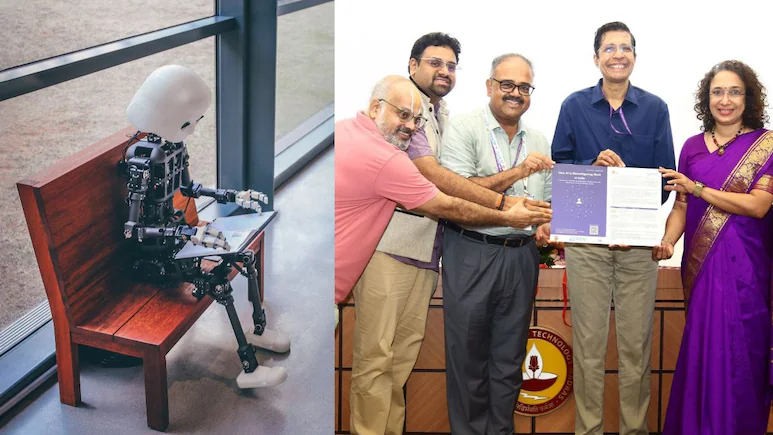
IIT Madras: The Indian Institute of Technology (IIT) Madras researchers have proposed that the effect of artificial intelligence (AI) on jobs in India must be ascertained by looking at each task instead of whole jobs. The research looked at worries about people losing their jobs and some people not having access to new chances. The whitepaper titled ‘How AI is Reconfiguring Work in India’, released during the recent ‘Industry Conclave on AI Governance 2026’, comes as AI changes workplaces around the world.
The paper was brought out by researchers from Centre for Responsible AI (CeRAI), an interdisciplinary research group at the Wadhwani School of Data Science and Artificial Intelligence (WSAI), IIT Madras. The work showed how AI can help people take over tasks, change existing jobs, and create new ones. Most jobs have tasks and only some of those can be undertaken by AI. The effect depends on the tasks, the industry, rules for AI and how much it costs to use AI. We also looked at who gains from these changes and who is affected. The paper categorised the ways people and AI work together into two groups: On one hand, AI does most of the tasks and people check the results. On the other hand, people make the decisions and use AI to make their work easier. These groups have several pathways showing how work is changing, like tasks using good enough AI, tasks that need advanced AI, AI not capable enough, using AI for dangerous jobs, and the ongoing need for people to make decisions, follow rules and have the right skills. The researchers also looked at how the cost of AI tools and advanced AI systems affect who uses them. Cheaper AI can spread fast in jobs like business process outsourcing, bookkeeping and checking quality in medium businesses. Jobs that need advanced AI like legal work and looking at medical images might stay in big cities and big companies where there is more technology, better infrastructure, and more skills.
Explaining the paper, Prof Balaraman Ravindran, Head, CeRAI and WSAI, IIT Madras said: “This paper challenges the idea that AI always takes away jobs.
Will AI Take Your Job? IIT Madras Says It May Only Handle Some Tasks
As per the report, the effect will be different in industries and for different workers. Using examples from call centres, factories, small businesses, cleaning robots, banking, law, software work and creative jobs, the paper looked at how AI affects each type of job. The report highlighted that redesigning jobs is as important as using AI. The paper stated that jobs affected by AI need to be changed, whether by helping people move tasks around or creating new roles that deal with using and managing AI systems. So, the challenge is not to see which jobs can be automated, but also to find out how jobs can be changed and how workers can get ready for new tasks. The researchers argued that the future of work depends not on how good AI systems are but also on how companies use them, how people’s work is changed, and whether workers can get the chances that come with new technology. The paper recommended that AI use should come with chances to learn new skills, know more about artificial intelligence, and have clear paths to new jobs. The researchers asserted that it is more important to prepare workers, companies, and leaders for job tasks, making sure the right skills, responsibility, and rules are in place as AI is used more.

