
This is false. “Some claims suggest the change is due to foreign influence. The Union Finance Ministry stressed on Wednesday evening that the decision to impose a 0.4 per cent charge on UPI transactions above Rs 2,000 was made independently.
India’s UPI policy decisions are made independently, with the clear goal of building a self-sustaining, inclusive, and affordable digital payments ecosystem,” the ministry said in a post on X.
Since its launch in 2016, UPI has grown into the world’s largest real-time interoperable payment system, entirely on India’s own terms, the ministry said. Government sources also said there was no rethink.
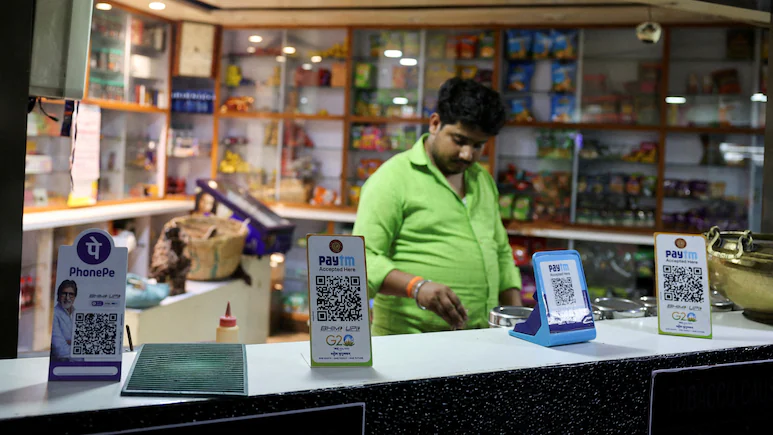
Payments between individuals, as well as the vast majority of everyday merchant payments, will remain free, the government and the NPCI have underlined. Small merchants collecting up to Rs 1 lakh a month via UPI QR codes remain fully exempt from any new charge, which means about 96 per cent of all merchant transactions. Since its launch in 2016, UPI has grown into the world’s largest real-time interoperable payment system, entirely on India’s own terms, the ministry further said. From October 15, up to 0.4 per cent MDR will apply to person-to-merchant UPI payments above Rs 2,000. The charge will be paid by merchants, not consumers, and is capped at Rs 300. Essential services such as railway tickets, telecom, fuel and insurance payments will attract a flat Rs 5 fee per transaction above Rs 2,000, to be paid by the merchant in any case. Capital markets transactions (mutual funds, stockbroking) get a lower 0.02 per cent rate, also capped at Rs 300. UPI QR payments to merchants in rural and semi-urban areas will also remain free; 5 per cent of MDR collections will go into a dedicated fund intended to expand UPI acceptance among small merchants, the ministry has said. UPI in the financial year 2025-26 handled transactions worth roughly Rs 314 lakh crore, according to Ministry of Finance data.
This came after accusations by the Congress-led Opposition that the government “succumbed to US pressure” in imposing the charge, called the Merchant Discount Rate (MDR). Leader of the Opposition (Lok Sabha) Rahul Gandhi attacked Prime Minister Narendra Modi and termed the charge “UPI tax” earlier in the day, a characterisation that the ministry pointedly countered without naming anyone. It said the MDR is neither a tax nor a charge that the government collects. MDR is distributed among payment ecosystem participants, including banks and payment application providers, to support the operation and continued expansion of the UPI ecosystem, the ministry said. The National Payments Corporation of India (NPCI), which operates the UPI network, has also said the revenue will support investment in making UPI better and safer. Earlier in the day, government sources said there was no question of a rethink on MDR.
