
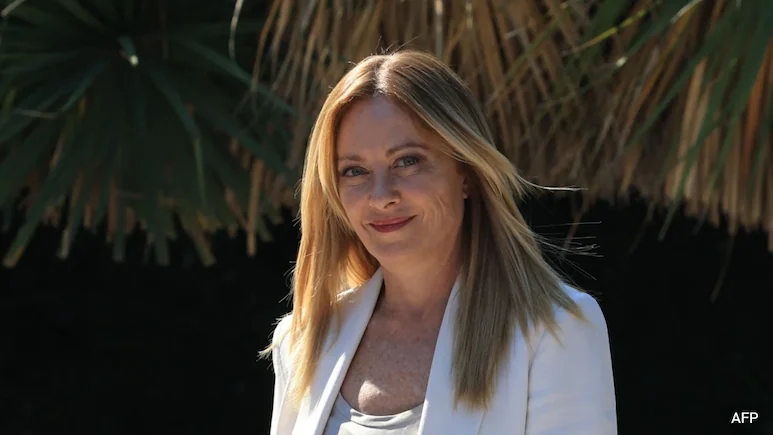
Italian Prime Minister Giorgia Meloni’s cabinet has enacted a decree law that prohibits the wearing of burqas and niqabs in schools. The law, adopted on Thursday, also establishes a limit on the number of students with inadequate Italian language skills per classroom. This move is part of Meloni’s broader educational reforms aimed at improving integration and language proficiency among students.
If a child seriously struggles to integrate at school, social services will be called and the parents will be obliged to attend free Italian lessons. Failure to comply will be punished with a fine of up to 1,000 euros ($1,140).
It introduces “A 30 percent cap on the number of students in a class who do not have an adequate command of Italian, more tools for learning our language, and a ban on the burqa and niqab in schools,” Meloni wrote on social media.
Italy is a frontline country for migration and integration is a hot campaign issue ahead of next year’s general election. But most of those would be not be affected by the new law, which targets new arrivals rather than those born in Italy or who attended kindergarten. But the limit was flexible, and could be raised in cases involving foreign students with adequate language skills, such as foreign students born in Italy, or lowered when foreign students have a poor command of Italian. A crackdown on the use of burqas in schools was called for in July by the National Future (FN) party. The FN, which is not part of the governing coalition, is further to the right than Meloni’s and has emerged as a major challenger, rising sharply in the polls since launching in February. (Except for the headline, this story has not been edited by NDTV staff and is published from a syndicated feed.)
Valditara said there were 34,000 school classes in Italy in which over 30 percent of the students are foreign. The 30 percent limit on the number of foreign students per class was established in a ministerial memorandum in 2010.
Save the Children warned forcing children to change schools or enrol in a different institution from their peers simply because of their nationality or limited proficiency in Italian would “create ‘first-class’ and ‘second-class’ students”. But Education Minister Giuseppe Valditara said “inadequate language proficiency… hinders educational progress”. “Parental participation in their child’s educational path is fundamental for academic success”, he told journalists. Opposition leader Elly Schlein accused the government of “a new witch hunt at the expense of children”. The burqa ban was “a matter of security”, Meloni said in a television interview after the cabinet meeting. “When a woman — or worse, a young girl — is forced to cover her face, she is being denied fundamental rights and the very integration that is so often loudly championed,” she said.
