
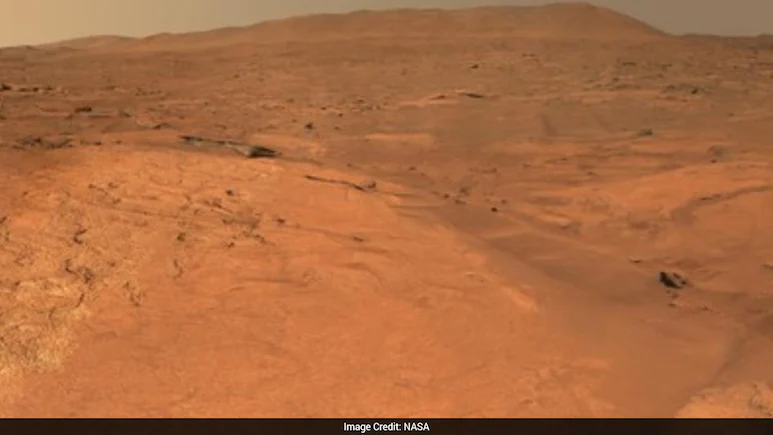
NASA’s Perseverance rover has found unexpected rocks at the inner edge of Mars’ Jezero Crater. Scientists expected to find sedimentary rocks formed from layers of sand near an ancient lake. Instead, the rover discovered igneous rocks that showed signs of interacting with water at least three different times. The findings provide a complex record of water activity on early Mars. The study was published in the journal Communications Earth & Environment. The area stretches along the shoreline of an ancient Martian lake.
Because they can preserve signs of past microbial life, scientists expected sedimentary rocks. Because carbonates often form in shallow ocean and lake environments, according to NASA, they were also interested in carbonate minerals detected by Mars orbiters. When Perseverance reached the area in September 2023, scientists called it the “Margin Unit.
The findings came from Perseverance’s SuperCam instrument, which is placed on the rover’s mast. It studies rocks by examining the light they reflect. The resulting plasma shows the rock’s chemical makeup.
Because jezero Crater is inside one of the largest areas of carbonate on Mars, she added that the findings are important. When scientists find an interesting rock, SuperCam can fire a laser at it from up to 21 feet away. Perseverance has studied more than 185 bedrock targets across the Margin Unit using this method.
Study lead author Candice Bedford said scientists originally believed that the carbonate seen from orbit had formed through interaction with the ancient lake in Jezero Crater. She said scientists now know that the location became a kind of crossroads for different water systems.
