
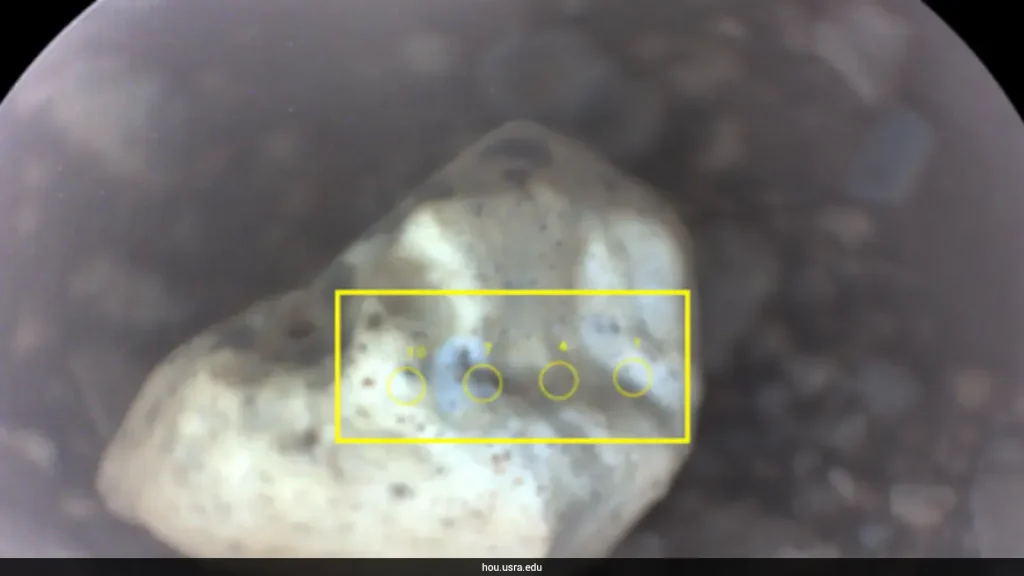
NASA scientists have made a surprising discovery on Mars after a rover fired a laser at a rock and uncovered evidence of gemstone-like minerals hidden inside. The discovery was made by NASA’s Perseverance rover, which is exploring Jezero Crater on the Red Planet. Scientists used the rover’s laser instrument to examine a rock and found unusually high amounts of minerals that are linked to gemstones on Earth.
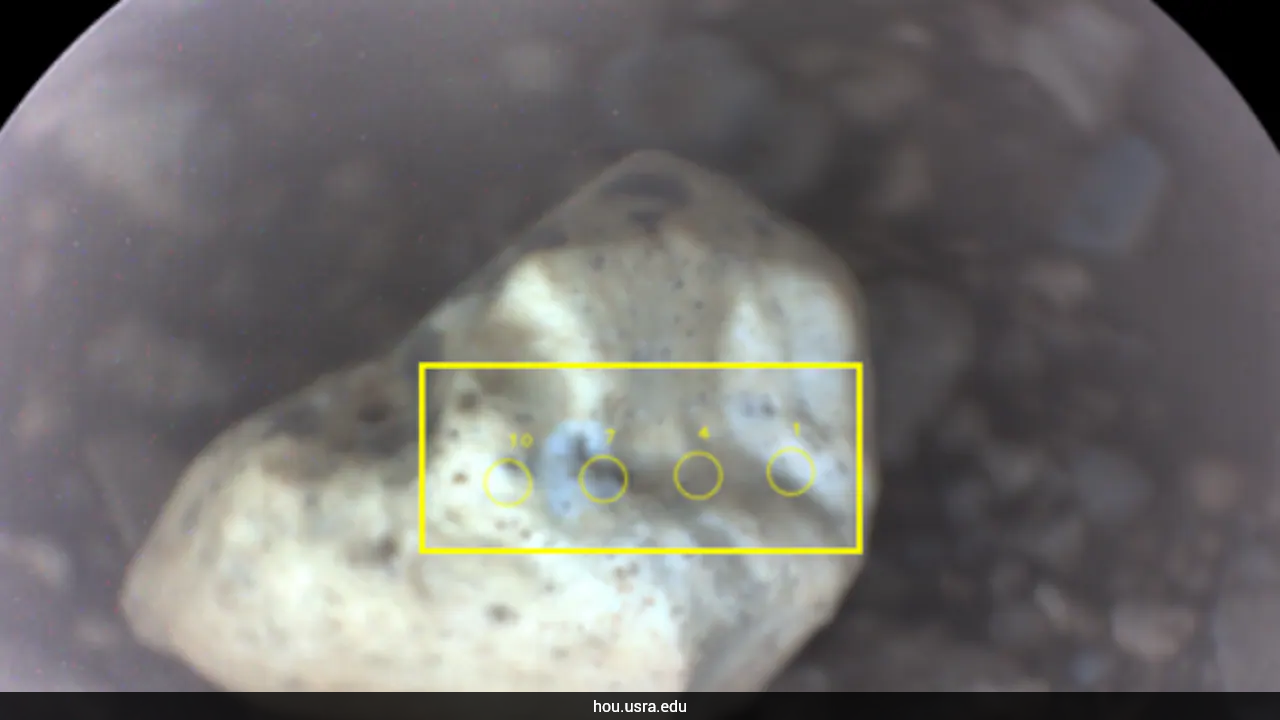
On Earth, similar conditions can help create crystals and gemstones. The presence of these minerals provides further evidence that water once played an important role in shaping the Martian landscape. Scientists say the discovery could help them better understand the planet’s ancient environment and whether conditions may once have been suitable for microbial life. The minerals also offer clues about the history of volcanic activity and the movement of water beneath the Martian surface. Perseverance continues to collect samples that could one day be returned to Earth for detailed study. Researchers hope these samples will reveal even more about Mars and its long geological history. The findings have been detailed in Geophysical Research Letters.
Because the minerals appeared in a location where they were not expected, researchers were surprised.
“Very unexpectedly,” wrote a team led by geochemist Ann Ollila of Los Alamos National Laboratory in a conference abstract, “SuperCam’s TRL analysis of three plagioclase-rich float rocks in the crater rim were found to exhibit clear signatures of chromium-bearing corundum. The minerals likely formed when hot water moved through cracks in the rock millions or even billions of years ago, according to the research team.
The finding suggests that Mars may have experienced more complex geological processes than scientists previously believed.
