
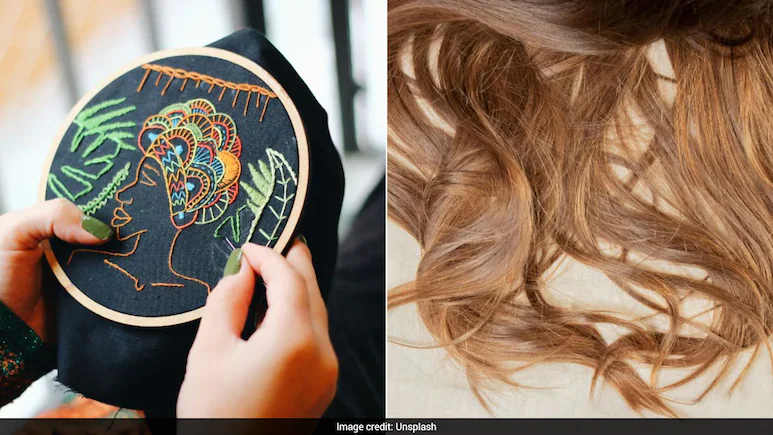
In China, some artists use real human hair to create ultra-fine portraits, the South China Morning Post (SCMP) reported. Embroidery is the art of decorating fabric. Using a needle, artists stitch thread, yarn, or embellishments like beads and mirrors to transform basic fabrics into unique art. But this craft is not limited to thread.
Today, artisans spend months on a single piece, preserving the tradition that turns human hair into timeless fine art. Chinese hair embroidery takes it to a completely different level While traditional Chinese silk embroidery is famous around the world. This ancient technique replaces standard thread with real human hair to stitch sharp portraits and intricate designs. Originally, Buddhist women stitched sacred devotional images using their own hair as an expression of devotion. What makes hair embroidery stand out is its level of detail. Human hair is naturally thin, but master artisans often take it a step further, splitting individual strands lengthwise into even finer threads to build up smooth shading, subtle skin tones, and lifelike textures in human portraits. Some modern artists also blend black, grey, white, and dyed human hair with fine silk or metallic gold threads to add depth and realistic colour variations. Meanwhile, silk embroidery can be done using machines. The report further mentioned that for hair embroidery, the artist can use many stitching techniques, including stemming, swirling, and wrapping. Though the craft faced a decline in past centuries, it has seen a revival in recent decades.
Because human hair naturally resists fading and decay, pieces made centuries ago can retain their crisp detail long after silk threads would have disintegrated. Hair embroidery must be executed by hand due to the ultra-fine quality of the material, according to the media outlet. The practice dates back more than 1,300 years, tracing its roots to the Tang dynasty in places like Dongtai, Jiangsu province. In 2021, Dongtai hair embroidery was officially recognised as a national intangible cultural heritage in China.
