
How poverty is defined in Jammu and Kashmir has raised concerns and sparked a political debate, as the official data contradicts its own framework and political leaders allege regional bias in favour of Jammu, thus blaming the government for denying jobs to a large section of poor people in the Kashmir Valley.
The skewed poverty definition has a direct impact on the job prospects of people. In response to a question in the UT Assembly, the government said 7,580 job vacancies have been filled in the last two years. Of the 758 jobs reserved for the EWS, 697 jobs have gone to the Jammu region and just 61 to Kashmir. 50 per cent of jobs will now remain available for Open Merit, according to sources. But even after 10 months, the revised quota policy could not be implemented in the absence of the central government’s approval.
In December last year, Omar Abdullah’s government approved a new reservation policy giving more representation to the General category.
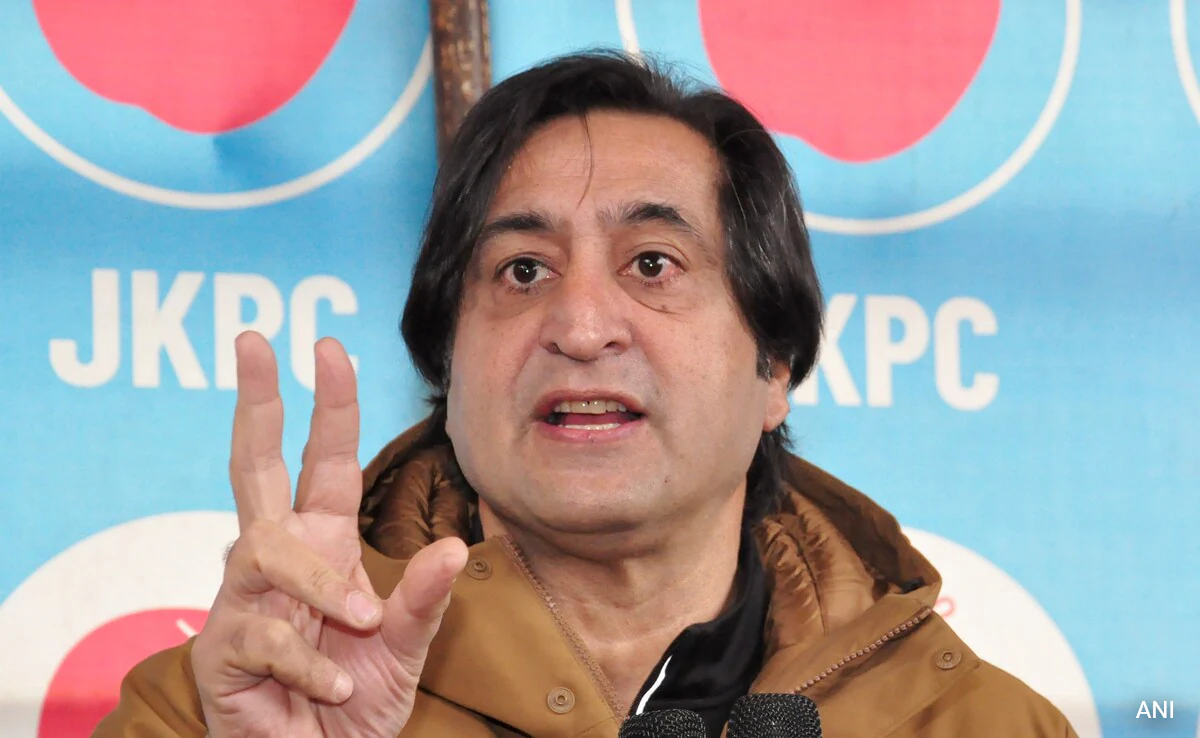
“How can the government spend crores in subsidies for the poor and then deny their poverty when they apply for a job?” said Sajad Lone, questioning the dual definition. He said there has to be a single uniform definition of poor, and EWS and BPL cardholders cannot be two separate entities.
The metrics and criteria employed by the government in issuing Economically Weaker Sections (EWS) certificates are being questioned. that has not been cleared by the BJP-ruled Centre so far While Omar Abdullah’s National Conference government has recommended changes in the existing policy. A revenue official (tehsildar) is authorised to issue an EWS certificate. In several cases, there are allegations of EWS certificates being issued to rich and influential families after manipulation of their asset details, while the poor who are holding BPL ration cards are routinely denied the certificate. Sakina Itoo, the UT’s Minister for Education and Social Welfare, admitted there is a discrepancy, but expressed the J&K Government’s helplessness in changing the eligibility criteria for EWS. Itoo was a member of the cabinet sub-committee which recommended changes in the existing reservation policy in J&K.
Jammu and Kashmir has a 70 per cent general category population who get less than 40 percent of jobs due to a controversial reservation policy. As 10% of jobs are reserved for the Economically Weaker Sections (EWS) exclusively for General category applicants, a contested definition of EWS has become another flashpoint in the wider reservation debate in the UT. “Anybody having a residential house of more than 3.68 marla is ‘rich’.
Sajad Lone said the government is using asset-based criteria to define poor under EWS. Even the poorest have a house of this size in the Kashmir Valley,” he said. She said it’s the central government that has formulated the eligibility criteria. She said that once the central government gives its nod to the revised reservation policy, it will largely address concerns over the EWS definition.
