
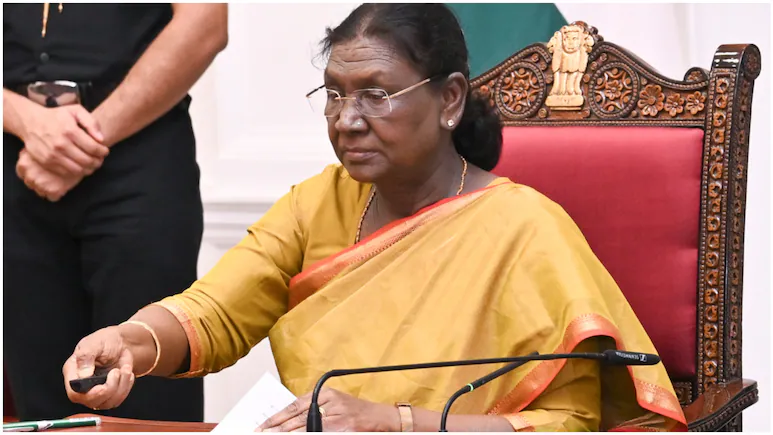
After Uttarakhand, Gujarat has become only the second state to receive the President’s assent to its version of the Uniform Civil Code, a set of rules that will govern civil matters like marriage, divorce and inheritance.
it will officially come into force on a date announced by the state government While the Act has received presidential assent. Published in the Gujarat Government Gazette, the legislation moves the state closer to establishing a singular legal framework for personal matters. The landmark legislation replaces varied personal laws with a unified legal code governing marriage, divorce, succession, and live-in relationships for all citizens residing within the state. However, the provisions do not apply to Scheduled Tribes, preserving constitutional protections for their customary rights. The Act also extends its jurisdiction to Gujarat residents living outside the state. Under the law, mandatory registration forms a central pillar of the administrative reform. Marriages solemnised within Gujarat, or involving a state resident, must be formally registered within sixty days to avoid monetary penalties. Additionally, the legislation introduces formal legal procedures and required registration protocols for couples entering live-in relationships. The Act standardises civil entitlements by setting uniform legal guidelines for succession, inheritance, and the drafting of wills. Practices such as polygamy are formally prohibited under the Gujarat UCC. No marriage can be dissolved except in accordance with its provisions, notwithstanding any personal law, custom or tradition to the contrary, it added. The authorities are currently preparing the necessary administrative framework and framing procedural rules to facilitate smooth enforcement across all districts.
The Gujarat Uniform Civil Code (UCC) Bill 2026 was passed by the BJP-dominated state assembly in March. The law fixes the minimum marriageable age at 21 years for men and 18 years for women.
Adultery, cruelty, desertion for at least two years, conversion and disappearance for seven years can become common grounds for divorce, the law says.
