
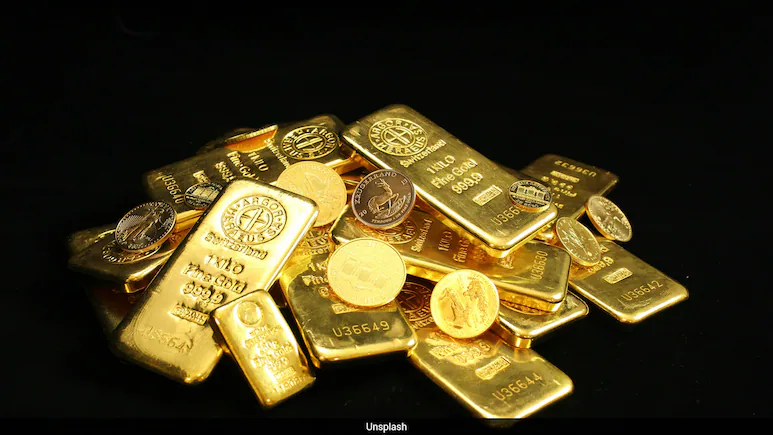
A US-based startup has claimed a major scientific breakthrough, saying it successfully converted mercury into stable gold using nuclear fusion technology, a feat long associated with the centuries-old pursuit of alchemy. However, the company’s claims have not yet been independently verified.
How Does the Process Work? Unlike conventional chemical reactions, which do not change an element’s identity, nuclear reactions can convert one element into another by modifying its atomic nucleus. How Does It Compare With CERN’s Record? However, the company has not disclosed the amount of gold produced, its purity, recovery efficiency, or the cost of the process, making independent assessment difficult. Could Lab-Made Gold Affect Gold Prices?
Marathon Fusion, based in San Francisco, announced on October 21 that it had converted mercury into gold using fusion-generated neutrons. The company said its gold-production rate was ten times higher than a benchmark reported by CERN in 2025. The company said it exposed mercury-198 to high-energy neutrons produced during fusion reactions, creating mercury-197, a radioactive isotope that eventually decays into stable gold-197. In 2025, researchers at CERN reported producing tiny quantities of gold during experiments at the Large Hadron Collider. The experiments, conducted between 2015 and 2018, generated an estimated 29 picograms of gold, an extremely small amount.
The process relies on nuclear transmutation, a technique that alters an atom’s nucleus to transform one element into another, according to Marathon Fusion. Marathon Fusion said its method achieved a gold-production rate ten times higher than that benchmark.











The announcement has prompted questions about whether artificially produced gold could one day influence global gold markets. Producing gold through fusion would require highly advanced technology, substantial investment and stringent safety measures. Commercial-scale production remains unproven. The startup is also exploring the production of radioactive isotopes for use in cancer diagnosis and treatment.
that projection remains theoretical and depends on the successful development of commercial fusion reactors While Marathon Fusion previously estimated that a future fusion power plant could generate roughly two tonnes of gold per year.
independent verification and additional technical data will be needed to determine whether the process works as described and whether it can produce gold economically at scale Although the claim has attracted significant attention.
