
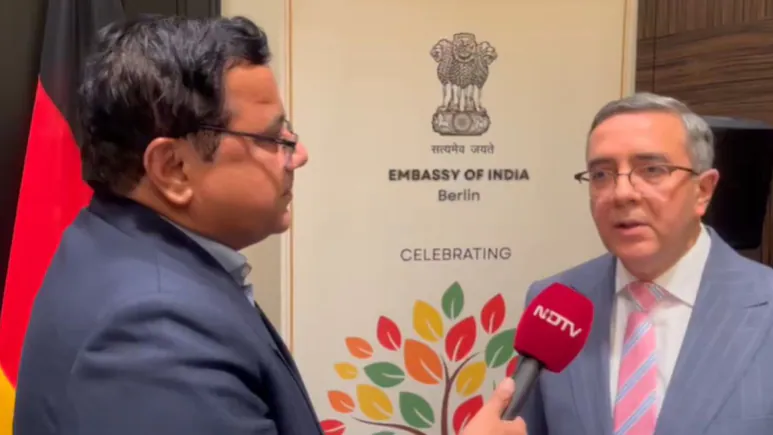
Indian Ambassador to Germany Ajit Vinayak Gupte has said Germany has emerged as a major destination for Indians within the European Union, with a sharp increase in the Indian diaspora and the number of Indian students enrolling in German universities.


She also highlighted the support available for research and entrepreneurship as factors attracting Indian students. Students also pointed to Germany’s post-study employment opportunities. When asked what India needs to do to encourage researchers studying abroad to return, one student referred to the Prime Minister’s Research Chair (PMRC) Scheme, which aims to attract distinguished Indian-origin researchers, scientists, and professionals with international research experience to strengthen the country’s higher education and research ecosystem. She also highlighted barriers between the research, design, and manufacturing stages, calling for government support to streamline these processes and help researchers turn their ideas into viable products and businesses.
The student said that offering only 120 positions was insufficient compared with the approximately 70,000 Indian students studying in Germany. She suggested increasing the number of positions to at least 1,000 to provide more researchers with an opportunity to return.
Angel Joseph, a postdoctoral researcher at Technische Universität Berlin (TU Berlin), said the university offered opportunities to pursue research, access grants, and develop startup ideas. Another student said many German universities offer tuition-free or low-cost education, while research funding makes it easier for students to pursue academic work without facing prohibitive costs. One student said obtaining a post-study work visa was relatively straightforward, while learning German was important for entering the professional workforce. A student from Kerala, who is pursuing a PhD after working on a research project in Germany, said the ease of conducting research and access to social security and other benefits for researchers had influenced her decision to stay in the country. One student said research projects in Germany are often funded for an initial period of three years, encouraging researchers to work towards completing them within that timeframe, or within four years at most. In India, similar research may take five years or even seven to eight years, she said, identifying lengthy completion timelines as one reason students seek opportunities abroad. Another student said inadequate funding and laboratory infrastructure were major challenges in India.
