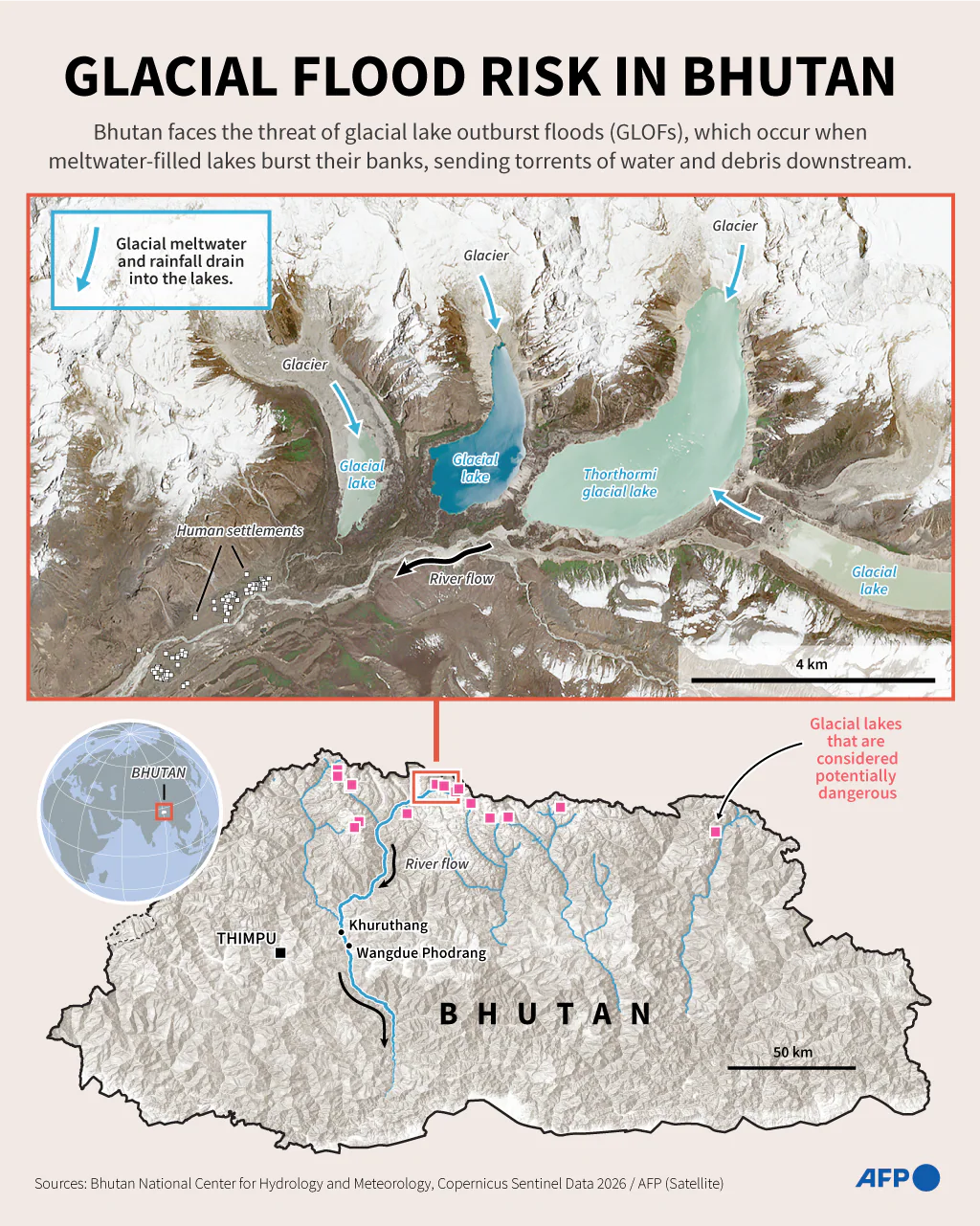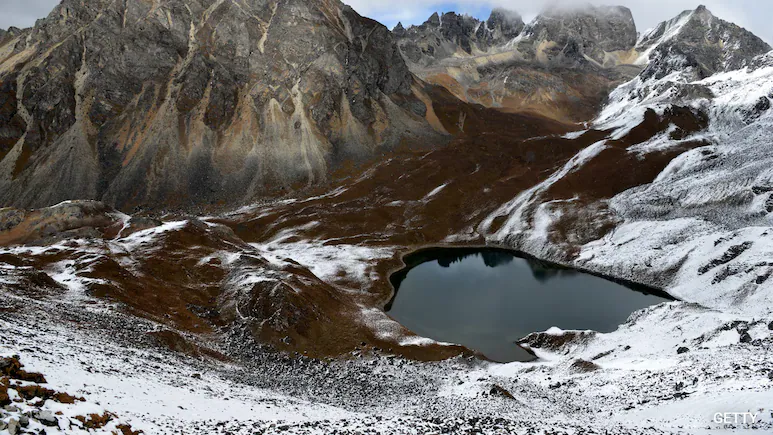
No casualty has been reported in the incident that occurred on Thursday, but the gush of water washed out entire facilities at Gasa Tshachu, a popular natural hot spring located near the banks of the Mo Chhu River in the Gasa District. The glacial lake burst in Bhutan, which prompted flash-flood warnings in Assam and parts of West Bengal, has drawn attention to a growing threat in the Himalayas. Bhutan or Druk Yul in its national language Dzongkha, is located in eastern part of the Himalayans, which are dotted with glacial lakes, some holding enormous volumes of water behind fragile natural barriers. If these barriers collapse, the resulting floods can sweep through valleys, destroy infrastructure and threaten communities far downstream.
How Climate Change Is Adding To The Danger
Bhutan has been strengthening its monitoring and early warning systems through satellite observations, field assessments and river-level monitoring. But predicting an outburst and ensuring that downstream communities receive adequate warning remain major challenges. On October 6, 1994, a partial collapse of the moraine dam at Lugge Tsho triggered a devastating flood that killed around 21 people and damaged homes, farmland and infrastructure. A 2024 study published in Natural Hazards and Earth System Sciences mentioned other GLOF events in Bhutan, including those involving Tshojo Lake in 2009 and Lemthang Tsho in 2015.
Glacial lakes form when retreating glaciers leave behind depressions that gradually fill with meltwater. Many are held back by natural dams made of loose rocks, debris and glacial sediment, known as moraines. Their sudden collapse can release enormous volumes of water, rocks and debris in a powerful surge. Such events are known as glacial lake outburst floods (GLOFs).
These barriers can become unstable due to landslides, avalanches, heavy rainfall or rapid melting.