
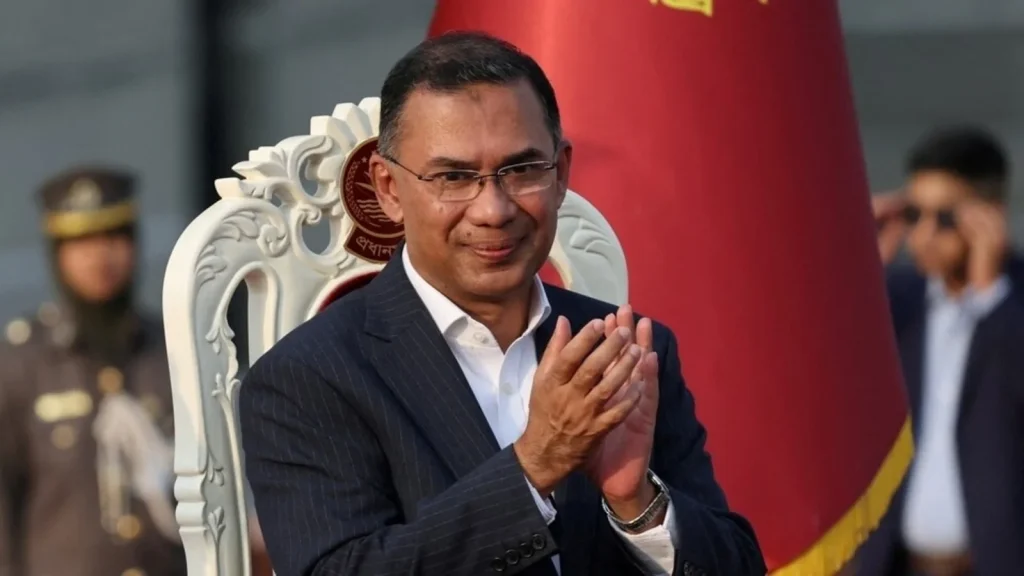
Bangladesh Prime Minister Tarique Rahman was scheduled to visit New Delhi for three days starting August 23rd, but this trip has been postponed. The reasons for this delay, along with the subsequent developments, provide insight into the current state of India-Bangladesh relations.
This postponement raises questions about the diplomatic ties between the two countries and what it signifies for future engagements.
Rahman is reportedly reluctant to even attend the upcoming BRICS summit, despite an Indian invitation, and despite Chinese and Russian leaders confirmed to attend. That’s a lost chance to negotiate on counter terrorism, trade, electricity, and transport — leverage Dhaka had and chose not to use. At its core, this is the tragic short-sightedness of an under-confident Dhaka establishment prone to imagining threats that don’t exist. It has damaged what was an honest, pragmatic attempt to rebuild ties on a durable, mutually beneficial footing. Ahead of the cancelled visit, a top aide to Rahman signalled openness to a so-called ‘Islamic NATO’. At the same time, Dhaka separately demanded India extradite former Prime Minister Sheikh Hasina for trial. Bangladesh’s troubles run deeper than diplomacy. Jamaat-e-Islami is pushing hard for power. Harkat-ul-Jihad-al-Islami, JMB and Islami Chhatra Shibir remain active, alongside Pakistan-linked outfits like Jaish and Lashkar-e-Taiba operating out of Cox’s Bazar and Chittagong, with added pressure from the Arakan Army. Blaming India for problems rooted at home isn’t a strategy — it’s avoidance. Both Washington and Beijing have played roles in Dhaka since Hasina’s exit — the Yunus-led interim government leaned West, and Chinese influence has grown since. India, by contrast, bailed out Sri Lanka’s economy, supplied drinking water to the Maldives, sent vaccines to Bangladesh and aided Nepal too — support without strings, unlike the transactional plays of other powers. None of this happens in isolation from India’s own defences. The so-called chicken’s neck can, if needed, be widened into an elephant’s neck, with artillery, air power and missile cover already in place.
Neither helps reset a relationship India has invested in since Bangladesh’s birth in 1971 — from diesel and onions to vaccines during the pandemic. Home Minister Amit Shah has announced a triangular security grid for the Siliguri Corridor — the 60-km, 21-km-at-its-narrowest strip linking the mainland to the Northeast. New military stations are coming up at Kishanganj (Bihar, at the corridor’s mouth), Chopra (West Bengal, at its centre, facing Bangladesh’s Rajshahi district) and Dhubri (Assam), backed by the Hashimara air base, the 17 Strike Corps at Panagarh and the 33 Corps at Siliguri. An underground rail-and-road network — 35 km of railway already cleared, with tunnel-based ammunition depots to follow — will reinforce the grid further.
India has told both powers plainly that such interference is counterproductive, pointing to precedents in Nepal, Sri Lanka’s Hambantota and the Maldives.
