
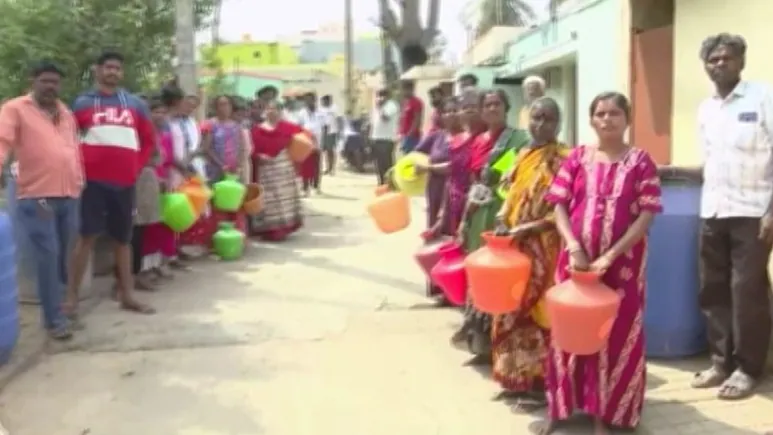
As Bengaluru grapples with an unprecedented water crisis , the state government is exploring alternative solutions, including recycled and treated water from residents’ associations. Helplines are overwhelmed as the city faces a shortfall of over 1,500 MLD (Million Liters Per Day) in its daily water requirement, which ranges between 2,600 MLD to 2,800 MLD.
Government Responds to Drought Crisis in Karnataka
The Karnataka state government, under Chief Minister Siddaramaiah, has taken immediate action to tackle the severe drought affecting the region. Control rooms have been set up, and dedicated helpline numbers are now available for residents seeking assistance.
In total, 223 out of 236 Taluks in the state have been declared drought-hit, with 219 experiencing severe impacts. To address this crisis, local MLAs will lead task forces aimed at managing the situation effectively.
The crisis has taken a political turn, with leaders of the opposition Bharatiya Janata Party (BJP) pointing fingers at the government for its alleged failure to implement effective water management measures. The BJP leaders have issued a stern warning, threatening protests if the Karnataka government does not take decisive action within a week. During a press briefing, Chief Minister Siddaramaiah assured the public that the government would spare no effort in tackling the water crisis. The government is exploring various options to mitigate the crisis, including regulating water tankers and considering the use of treated water from apartment complexes for non-portable purposes.
With the anticipation of a more severe summer this year, the government estimates 7,082 villages across Karnataka, along with 1,193 wards, including those in Bengaluru Urban district, face the risk of a drinking water crisis in the upcoming months. Tumakuru district tops the list with 746 vulnerable villages, while Uttara Kannada has the highest number of vulnerable wards, according to a report from the revenue department. Bengaluru Urban district is not exempt, with 174 villages and 120 wards identified as susceptible to the impending water shortage. In Bengaluru, where water is supplied through 120 municipal tankers and 232 water board tankers, the situation remains critical.
The Bengaluru city administration took action against the illicit water tanker operations. Responding to the Bangalore Water Supply and Sewerage Board (BWSSB) plea to standardise water rates, and in light of the escalating demands and surging prices for tanker services, the District Collector of Bangalore City, established rates for 200 privately operated tankers over a four-month duration.
