
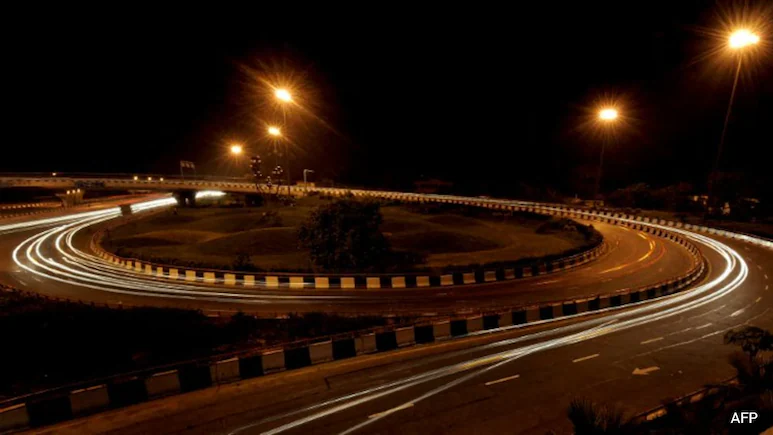
Delhi is set to improve traffic flow with the construction of two new flyovers in South Delhi. This initiative comes alongside the completion of three underpasses near Mukarba Chowk in the northern part of the city. These projects aim to alleviate congestion on some of the capital’s busiest routes, providing commuters with more efficient travel options.
In South Delhi, the government plans to extend the Modi Mill flyover towards Kalkaji and construct a new parallel flyover at the Savitri Cinema junction, targeting traffic bottlenecks around Kalkaji, Nehru Place, Greater Kailash and CR Park.
Union Home Minister Amit Shah will lay the foundation stone for the two projects on Tuesday. For commuters using the Mukarba Chowk corridor, the relief could be immediate. In South Delhi, the government plans to extend the Modi Mill flyover towards Kalkaji and construct a new parallel flyover at the Savitri Cinema junction, targeting traffic bottlenecks around Kalkaji, Nehru Place, Greater Kailash and CR Park. He will also inaugurate the completed Mukarba Chowk underpasses and Barapullah Phase-III. What Will Change Around Kalkaji And Nehru Place? The proposed flyover will have nine-metre-wide carriageways on either side, along with medians, crash barriers and railings. For daily commuters, its route is important. The project will cover key intersections around Captain Gaur Marg, Maa Anand Mai Marg, Lotus Temple Road, Masjid Moth Road and the Nehru Place bus depot. The flyover is aimed at allowing through-traffic to bypass surface-level intersections along the corridor, reducing pressure on roads below. The project has been in the works for several years. New Flyover At Savitri Cinema Junction The second project will come up at the Savitri Cinema junction, a busy point for motorists travelling through Greater Kailash, CR Park and GK-II. The project will also have ramps for entry and exit, dedicated bus bays and redesigned junctions. Plans include revamped footpaths and cycle tracks, improved drainage to tackle waterlogging and upgraded street lighting. It comprises three underpasses near Gate No. They will connect Badli and Rohini on one side with Azadpur and Jahangirpuri on the other, giving motorists an alternative to using the congested Mukarba Chowk interchange or the flyover. The third underpass has been built for pedestrians and non-motorised transport. It will allow passengers using Haiderpur Badli Mor Metro station to cross the Outer Ring Road towards Shalimar Bagh and Azadpur Mandi. the two South Delhi flyovers are expected to take two to two-and-a-half years to complete While the Mukarba Chowk underpasses are complete.
Because of site-level constraints, an earlier proposal for flyovers at Modi Mill and Savitri Cinema was approved in 2017 but could not be executed. The new underpasses are expected to cut travel time by up to 10 minutes per trip and reduce the distance travelled by nearly one kilometre. Delhi PWD Minister Parvesh Verma said the two South Delhi projects have been sanctioned at a combined cost of Rs 371 crore, with Rs 150 crore earmarked for the current financial year. The government has set a target of completing them within 24 to 30 months. The PWD plans to extend the existing Modi Mill flyover towards Kalkaji through a roughly 1.5-km-long, six-lane structure. A roughly 900-metre-long, one-way, three-lane grade separator is planned at the junction, including around 435 metres of elevated roadway. 3 Underpasses Ready At Mukarba Chowk While commuters in South Delhi will have to wait for the new flyovers to be completed, the Mukarba Chowk project is ready. 3 of Haiderpur Badli Mor Metro station – two for vehicles and one for pedestrians and non-motorised transport. The two vehicular underpasses are around 50 metres long, 9.6 metres wide and six metres high. PWD estimates that around 15,800 vehicles will use the new corridor. The underpasses are expected to reduce travel time by up to 10 minutes per trip and shorten the journey by nearly one kilometre. The project is also expected to save around 58,000 litres of fuel annually.
The revised plan was cleared earlier this year.
