
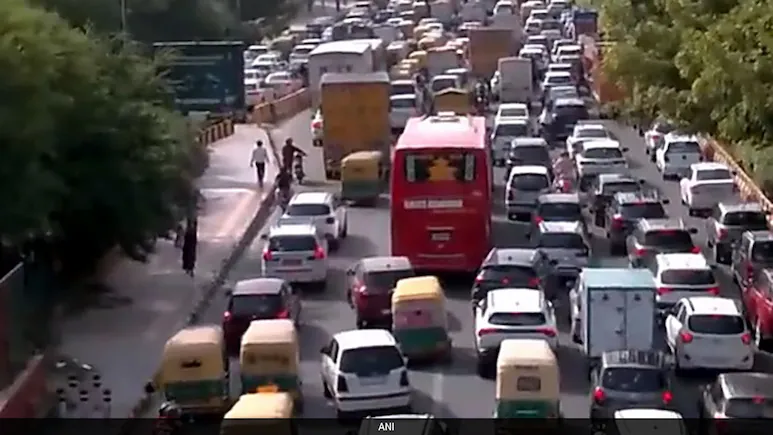
Traffic is expected to remain affected between 9 am and 2 pm because a large number of people are expected to reach the ceremony site by buses and cars, according to a traffic advisory issued by the Delhi Traffic Police. Traffic movement around parts of south-east Delhi is expected to be affected on Tuesday, September 29, as the opening ceremony of the Barapullah Phase III flyover is held.
Delhi Traffic Police has advised commuters to avoid the Ring Road between Sarai Kale Khan and Ashram Chowk from 9 am to 2 pm on September 29 due to the Barapullah Phase III opening ceremony.
The advisory lists Sarai Kale Khan, Maharani Bagh and Ashram Chowk among the affected stretches. Commuters have been advised to avoid the Ring Road between Sarai Kale Khan and Ashram Chowk during the five hours and use alternative routes. It is expected to provide a faster connection between East Delhi, South Delhi and areas towards Noida. The project has been delayed for several years. The new corridor includes multiple loops as well as facilities for pedestrians and cyclists. The project also includes a new road bridge across the Yamuna.
The Barapullah Phase III corridor is a 3.5-km elevated road connecting Mayur Vihar Phase I with Sarai Kale Khan. NDTV has reported that the corridor could reduce the journey towards AIIMS from around 35 to 40 minutes to about 15 minutes. NDTV reported that it has missed nine deadlines since work began, even though the project was originally approved in 2014 and scheduled for completion in 2017. What commuters need to know Date: September 29, 2026 Traffic impact: 9 am to 2 pm Affected areas: Sarai Kale Khan, Maharani Bagh and Ashram Chowk Advisory: Avoid the Ring Road from Sarai Kale Khan to Ashram Chowk Alternative: Use other routes during the affected hours The traffic restrictions are linked to the opening ceremony and should be distinguished from the longer-term traffic changes expected after the new corridor opens.
