
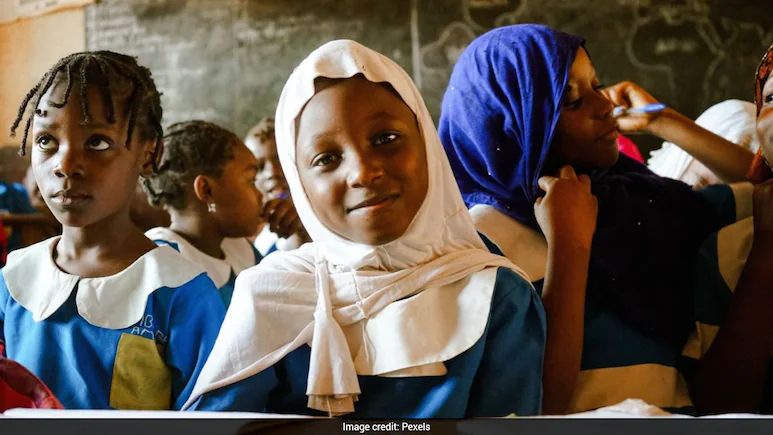
The report also flagged a sharp rural-urban divide in India, where girls in rural areas remain far less likely than boys to complete upper secondary education. Gender parity in school enrolment has improved worldwide, but child marriage and early pregnancy continue to prevent many girls from completing their education, according to UNESCO’s 2026 Global Education Monitoring (GEM) Gender Report.

Several countries, including Sierra Leone, Togo, Cameroon, Tanzania, the Central African Republic, and Sao Tome, and Principe have removed bans that prevented married, pregnant, and parenting girls and women from attending school. The report further explained that a girl may be legally entitled to return to school after pregnancy, but unable to afford transport, find childcare, use suitable water and sanitation facilities, travel safely or overcome stigma at school. In sub-Saharan Africa, an estimated six million pregnant girls and young mothers aged 10-19 years were out of school in 2024, and fewer than 5 per cent of pregnant and parenting girls in the region returned to education.
UNESCO said early marriage and motherhood are major obstacles to girls completing school. UNESCO Director-General Khaled El-Enany said that although as many girls as boys are now enrolled from pre-primary through secondary education globally, too many girls still face barriers to accessing, completing, and thriving in school.
As per the report, while gender gaps in education have narrowed and the share of girls married before 18 has decreased globally, very few girls return to school after giving birth in some regions, underscoring the need to end child marriage, prevent early pregnancies, and guarantee young mothers’ right to continue their education.

