
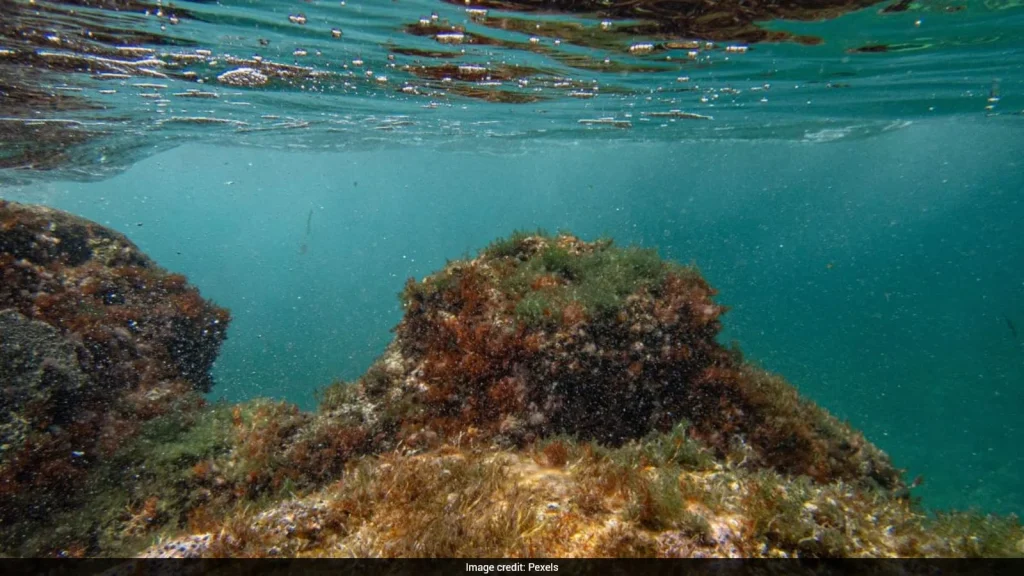
IIT Madras: The Indian Institute of Technology (IIT) Madras’ Wadhwani School of Data Science and AI (WSAI) researchers have uncovered the crucial role played by rare marine microorganisms in maintaining the stability of ocean ecosystems. In an official press release, the institute stated that by integrating microbial sequencing data from more than 4,600 publicly available ocean samples collected across tropical, temperate and polar regions by various groups, the research offers new insights into how bacterial communities assemble, interact, and remain stable in diverse marine environments.
The study highlighted that as climate change continues to alter ocean temperatures and marine ecosystems, understanding the behavior of microbial communities has become increasingly important for predicting ecosystem responses to environmental disturbances. The institute stated that this can help scientists monitor biodiversity, track changes in ecosystems, and support conservation and environmental management in a wide range of natural settings. However, despite their ecological importance, the scientific community has had only a limited understanding of the processes that govern the formation and resilience of these microbial communities on a global scale, he added.
The study has provided comprehensive global analyses of marine bacterial communities, the institute said. Healthy oceans are fundamental to climate regulation, fisheries, biodiversity conservation, and global biogeochemical cycles, according to the report. Identifying specialist microbial genera as key contributors to ecosystem stability highlights the potential importance of ecologically significant rare taxa alongside more abundant organisms in marine conservation, the report said. the approach developed by the researchers can be applied to many different environments, according to the team Although this study focused on identifying broad groups of microbes rather than individual species. Elaborating on the importance of the study, IIT Madras Professor Karthik Raman said that marine microorganisms form the invisible foundation of ocean ecosystems. “They regulate nutrient cycling, sustain marine food webs and play a vital role in controlling the Earth’s climate,” he stated. Pranathi Ravikumar, an undergraduate student from the Department of Biotechnology, said that the research “combined multiple advanced ecological approaches. “This allowed us not only to identify which microorganisms are present in the oceans but also to understand how they interact to sustain ecosystem resilience,” she added.
