
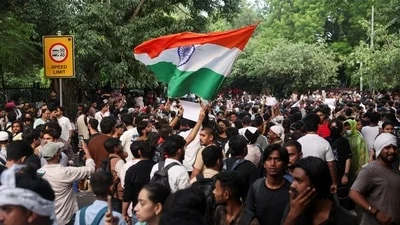
The Cockroach Janta Party (CJP) on Monday announced a peaceful protest march in Delhi on September 5 from India Gate to the Delhi police headquarters, alleging that the Centre failed to honour commitments made to young protesters when the stir at Jantar Mantar was called off last month.
Delhi Police says no permission sought, protests barred at India Gate
Students, youth organisations and young citizens from across the country have been invited to participate in the event. “Members of the committee expressed serious doubts over whether the government intends to honour its word at all. Last week, the Supreme Court had also returned to the issue of FIRs, while announcing the setting up of a high-powered committee.
The 2.5-km march will see the families of National Eligibility cum Entrance Test (NEET) aspirants who died by suicide and victims of alleged police brutality take part. But a senior Delhi Police officer said that the department had not received any request for a march or protest, adding that prohibitory orders under Section 163 of the Bharatiya Nagarik Suraksha Sanhita are already in force in the New Delhi district area where India Gate is located, and that protests and marches are only allowed near Jantar Mantar with prior permission. The last notable protest or march allowed near India Gate was in 2012, in the aftermath of the December gang-rape and murder. The court had also stressed that students participating in a peaceful and lawful protest have constitutional protection under Article 19, while distinguishing them from persons with serious criminal antecedents who may have entered the gathering and indulged in violence.
For a month now, instead of implementing what was solemnly promised, the government played delay games, hidden behind technicalities, and avoided giving clear commitments even before the Supreme Court of India,” the party said in a statement. Solicitor general Tushar Mehta had said that the Centre and Delhi Police were not opposing the quashing of FIRs against student protesters, but maintained that persons with serious criminal antecedents who had allegedly infiltrated the protests could not be treated on the same footing.
