
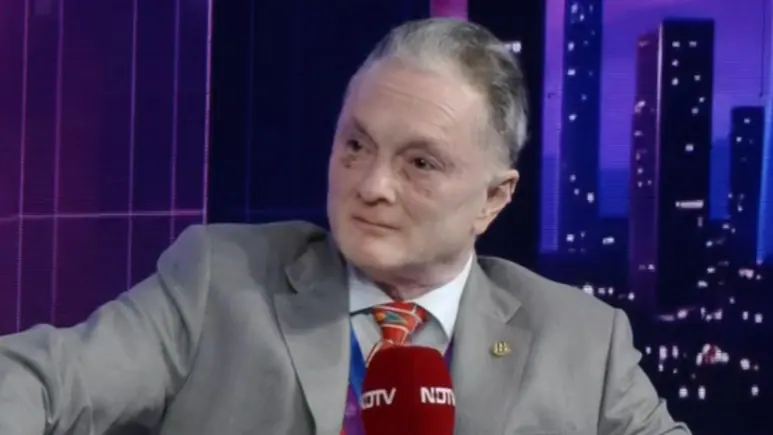
He clarified that no such move has been announced yet.
Raymond Group Chairman and Managing Director Gautam Singhania has said that separating the group’s aerospace and auto businesses into distinct entities could make sense in the future.
Not today. There’s nothing announced today, but at some point it will make imminent sense. Yes. He did not provide a timeline for any such move. Singhania highlighted the uncertainty surrounding US tariffs as a challenge for businesses.
He noted that around 85% of Raymond’s business comes from domestic consumption, while exports account for the remaining 15%.
Asked whether Raymond could further separate its auto and aerospace and defence businesses, Singhania said, “It makes imminent sense at some point. Singhania said Raymond’s businesses are now divided into three separate entities: lifestyle, real estate, and aerospace, auto and defence. He said the aim was to give each company its own management and governance structure, with professionals who understand the respective industries. He also said the structure would allow investors to choose which businesses they wanted to invest in, while making management incentives more closely aligned with each company’s performance. The separation would also make succession planning easier, according to Singhania. Discussing the broader business environment, Singhania said India’s large domestic consumption market was a major advantage amid global uncertainty. He said rising input costs, including those linked to higher oil prices, remained a challenge. “You know with oil prices going up everything is sort of interconnected with oil prices and this start-stop of tariffs, no tariffs, my personal opinion you know don’t shoot the messenger but is that there are going to be fundamental shifts in supply chains to the U.S. because companies like us will want to supply less to U.S. because you cannot go straight to tariffs, stop your production, look for new markets, then go back to the U.S., then again threaten,” he said.
