
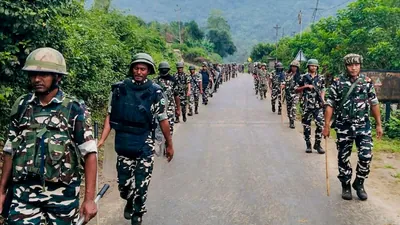
The Arunachal Pradesh Congress Committee (APCC) on Monday criticised the reported deployment of 250 additional Rapid Action Force (RAF) personnel in areas affected by the proposed Siang Upper Multipurpose Project (SUMP), accusing the state government of relying on security measures instead of dialogue to address growing opposition to the mega-dam.
Questioning the government’s handling of the unrest, the party alleged that assurances reportedly made by Chief Minister Pema Khandu during meetings with Adi youths had failed to restore public confidence. It urged the government to initiate time-bound dialogue with affected communities and organisations opposing the project. The residences of Arunachal Pradesh BJP president Kaling Moyong and Pasighat West MLA Ninong Ering were also vandalised, along with the office of Adi Bane Kebang, the apex organisation of the Adi community.
The party warned that increasing security deployment without addressing the underlying grievances could deepen tensions across Siang, Upper Siang and East Siang districts, where opposition to the proposed 11,200-MW SUMP has intensified in recent weeks. arson and vandalism reported during the October 23 bandh, the Congress demanded an independent inquiry into the alleged use of tear gas against protesters at Dite Dime near Geku in Upper Siang district While condemning the violence.
APCC general secretary and spokesperson Kon Jirjo Jotham described the additional RAF deployment as “irresponsible, provocative and deeply alarming”, alleging that the BJP-led government was attempting to intimidate communities raising concerns over their land, livelihoods and future.
Chief minister Pema Khandu had earlier maintained that the preliminary feasibility exercise for SUMP did not constitute approval for the construction of the dam and reiterated the government’s willingness to engage with affected communities through dialogue.
