
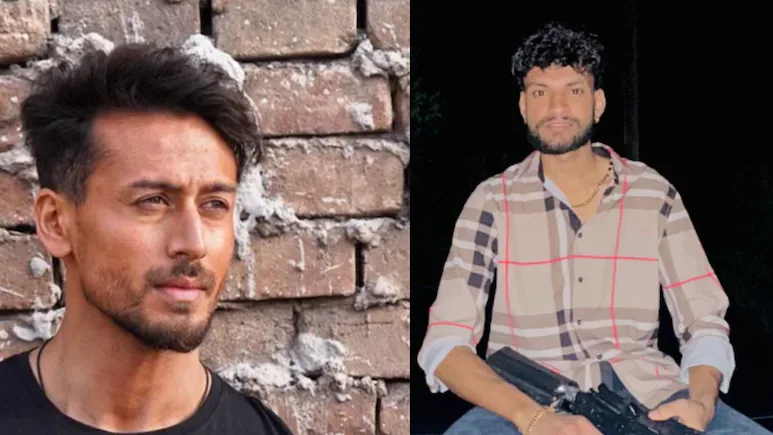
The firing at actor Tiger Shroff has once again brought to the fore the multifaceted relationship between Bollywood and the underworld. Over the last few decades, the Hindi movie industry has had multidimensional relationships with the underworld, ranging from predator-prey to performer-patron, business partners, and romantic partners.
Film Producers And Gangsters: Business Partners
Today, big domestic and foreign corporations are investing in the film industry, but till a few decades ago there was a shortage of investors who could invest clean money in films. The Bishnoi gang active in North Indian states claimed responsibility for the firing on actor Tiger Shroff last Sunday. Some gangsters, in a similar manner, had fired on film star Salman Khan’s house and filmmaker Rohit Shetty’s residence. In an interview to a news channel from jail, Bishnoi warned Salman to apologise or get killed. the observers of the underworld believe that Bishnoi’s real motive is to generate fear of his gang by targeting another celebrity Although the gangster is invoking religion. His gang shot into notoriety after killing a Punjabi singer, Sidhu Moosewala, four years ago. This was the tactic adopted by the Mumbai underworld gangs in the 1980s and 1990s. In the 1990s, the gangsters belonging to mafias like Dawood Ibrahim, Chhota Rajan, Abu Salem and Arun Gawli acted as predators who preyed upon filmmakers. They made threat calls from their safe havens abroad and extorted exorbitant amounts from them. Those who refused to pay were shot dead. The gangsters’ trick was to kill one and scare everyone. If a big film personality was shot or killed, the rest of the people would deliver money to the underworld gangs out of fear. If somebody paid a particular gang and the information got leaked to others, they would also call for extortion. The Anti-Extortion Cell of Mumbai Police was overworked during those days. READ | Opinion | Shoot A Star, Become A Star: Why The Attack On Tiger Shroff Is Different There used to be a relationship between Bollywood and the underworld as a partnership as well. This compulsion of the film industry was capitalised on by the gangs of the underworld and made it a means to convert their black money into white. Whatever money the gangs earned from all the illegal businesses, they used it in films. In return, they would ask for their share of the income from the film and take the international rights of the film. In that period, gangs had such an interference in Bollywood that they used to decide the star cast and scenes of the films.
Salman is on Bishnoi’s radar as he is accused of hunting black bucks, the animals whom Bishnois consider holy, in 1998. The killing of cassette industry tycoon Gulshan Kumar in August 1997, the murder of producer Mukesh Duggal in June 1997, the firing on film director Rakesh Roshan in 2000, the murder of actress Manisha Koirala’s secretary Ajit Dewani in 2001 and the firing on filmmaker Lawrence D’Souza in 2002 are some examples. The criminal case registered in 2001 over the film Chori-Chori Chupke Chupke is an example of a similar relationship between Bollywood and the underworld.
Bollywood Artists And Their Gangster Fans
There was another kind of relationship between the underworld, that of artist and fan. In the 1990s, underworld gangs often organised live shows of Bollywood stars, in which the stars who participated paid a good amount. Several pictures and videos of Bollywood celebrities dancing and singing at Dawood Ibrahim’s gang shows in Dubai and Sharjah have surfaced in recent years. The D-Company invited film personalities to perform at their family celebrations. Dawood Ibrahim handsomely paid the performers. Some of the Bollywood personalities went to Dubai willingly to gain proximity to the don or remain in his good offices, while others went to evade hostility with the gangster.
