
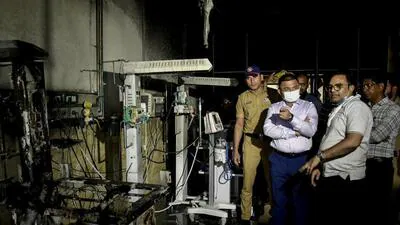
The Maharashtra public health department has suspended five officials and employees in response to an inquiry into a tragic fire at the Special Newborn Care Unit (SNCU) of Amravati District Women’s Hospital. The incident occurred on August 24 and resulted in the deaths of three infants. Officials confirmed the suspensions following the investigation into the circumstances surrounding the fire.
Government Takes Action Following Hospital Incident
The government has initiated measures against contractual staff deemed responsible for a recent incident, directing the public works department to take action against implicated officials. Two companies involved in the inquiry are facing penalties, including potential blacklisting.
To prevent future occurrences, the government has mandated the installation of CCTV systems in Special Newborn Care Units (SNCUs) and Neonatal Intensive Care Units (NICUs). Additionally, fire-safety mock drills will now be compulsory in all hospitals.
Strict adherence to standard operating procedures for fire and electrical safety, as well as equipment maintenance, has been ordered for government hospitals. District authorities and municipal commissioners have been given a three-month deadline to conduct thorough electrical and fire-safety audits of the hospitals in their areas.
Serious deficiencies were reported in equipment maintenance and technical inspection, they said. Thirty-six babies were rescued, while six critically affected infants were shifted to a nearby super-speciality hospital. Three newborns died. A ventilator is suspected to have triggered the fire. The fire pump house was also found locked.
A fire broke out around 3.15am on Monday in the neonatal unit on the third floor of the hospital, where 39 newborns were admitted.
The inquiry committee, headed by Health Services Commissioner Sanjay Katkar, found serious lapses in maintenance and safety systems, according to officials. It said the ventilator required timely maintenance and repairs, while the fire alarm and sprinkler systems were not operational.
