
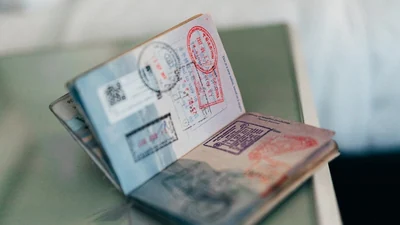
The government plans to expand the Digi Yatra system, which currently uses facial recognition technology for domestic air travel, to international departures. Trials are set to take place in Delhi, Mumbai, Bengaluru, Hyderabad, and Cochin between October and December, according to officials familiar with the initiative.
Rules for air travel, which are introduced by the civil aviation ministry, home affairs ministry and bureau of civil aviation, will have to change as well. Emigration checks will continue as they are, and passengers on inbound flights will see no change. The ministry of civil aviation’s Digi Yatra policy document describes the immigration system as isolated from the Digi Yatra boarding system, with automated border control at departure and arrival envisaged as a subsequent phase. All e-passports conform to international standards and carry certain biometric details. The upgraded application is undergoing final testing, with a vulnerability assessment and penetration testing by CERT-In, as well as Standardisation Testing and Quality Certification (STQC), planned as part of the process, the officer cited above added. The ministry of home affairs has for the past couple of years run a fast track immigration-trusted traveller programme (FTI-TTP), which speeds up immigration for pre-verified Indian nationals and Overseas Citizens of India (OCI) card holders at multiple airports. The two systems address different points — FTI-TTP the immigration counter, Digi Yatra the terminal entry and security check, at least in the initial phase.
Till July 30, 2026, a total of 17,316,144 e-passports have been issued, according to a government reply in Parliament in August.
“Delhi and Mumbai are likely to be the first airports to get the facility,” an officer aware of the plans said, while confirming the push by the government to initiate the scheme as soon as possible. Unlike the domestic system, which uses Aadhaar -based enrolment, the international version will use electronic passports, the first official said. In the domestic system, the app receives Aadhaar e-KYC data, extracts a reference face from it and matches that against a selfie taken with liveness detection, with the resulting credential stored in a wallet on the passenger’s phone, according to the ministry’s policy document. Software upgradation work is under way, after which an audit by the ministry of electronics and information technology (MeitY) will be conducted, before the trials begin, the second officer aware of the developments said. “A few rules need to be amended including the mandatory requirement of showing passports at the airport entry,” the first officer said.
