
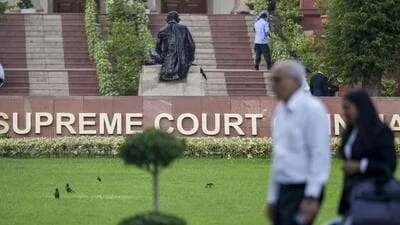
The Supreme Court on Thursday upheld a Madras High Court judgment striking down a Tamil Nadu government order that allowed individuals from backward classes and denotified communities who convert to Islam to claim reservation benefits
The high court held that membership of a notified Muslim community, such as Labbai, Rowther, Marakkayar or Deccani Muslim, was determined solely by birth and could not be acquired by conversion. The court held that these communities represent distinct socio-cultural communities rather than theological sects, making entry via religious conversion legally untenable. The Tamil Nadu government had approached the top court against the high court’s verdict that scrapped a 2024 government order which allowed converts from backwards classes, most backward classes, denotified communities and scheduled caste to be issued community certificates of one of the seven notified backwards class Muslim sects. The court was of the view that conversion severs the legal foundation of caste-based backwardness associated with the Hindu social order under Article 16(4) of the Constitution. The legal challenge originated from a petition filed by Paramasivam, a Hindu who converted to Islam in 2015 and adopted the name Sameer Ahmed.
After local district authorities rejected his application for a Backward Class Muslim (BCM) certificate as a “Labbai” Muslim, he approached the high court.
