
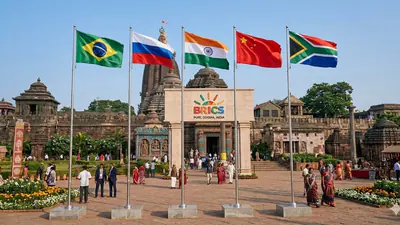
India is engaged in “frank” conversations with all Brics member states to finalise a consensus declaration at the grouping’s summit in New Delhi next month, people familiar with the matter said on Thursday against the backdrop of differences between Iran and the United Arab Emirates (UAE) over the West Asia conflict .
Because of the differences between Iran and the UAE, a Brics foreign ministers’ meeting in May concluded without a joint statement.
The ongoing discussions have also focused on resolving the crisis in West Asia through dialogue and diplomacy and ensuring the unimpeded flow of maritime commerce, the people said. Indian officials said earlier that the chair’s statement and outcome document issued by India after the foreign ministers’ meeting, which featured two specific paragraphs on which unanimity couldn’t be reached, could serve as the template for the declaration. India is engaged in “candid” discussions with Brics states to forge consensus on all important matters, the people said when responding to a question on whether the upcoming summit will produce a joint declaration. The external affairs ministry said in a statement that India’s leadership of Brics chairship is guided by the theme of “Building for Resilience, Innovation, Cooperation and Sustainability”, reflecting the vision of a people-centric approach rooted in the spirit of “humanity first”.
Upcoming Brics Summit in India: Key Leaders and Agenda
India will host the 18th Brics Summit on September 12-13, welcoming prominent leaders including Chinese President Xi Jinping, Iranian President Masoud Pezeshkian, and Russian President Vladimir Putin. This marks Xi’s first visit to India in seven years, during which he is expected to meet with Prime Minister Narendra Modi for bilateral discussions.
Preparatory meetings among Brics nations have highlighted critical topics such as territorial integrity, the free flow of maritime commerce, and the protection of civilians and civil infrastructure. Additionally, the discussions will address the resolution of the West Asia conflict through dialogue and diplomacy, according to sources familiar with the negotiations.
