

Nearly two decades after Pakistan was battered by revelations that its most celebrated nuclear scientist, Dr Abdul Qadeer Khan, had run a clandestine global nuclear proliferation network that supplied sensitive nuclear technology to countries including Iran, Libya and North Korea, the world’s nuclear watchdog has endorsed Pakistan’s civilian nuclear security framework.
Former Indian diplomat Ambassador Rakesh Sood, who served as the Prime Minister’s Special Envoy for Disarmament and Non-Proliferation Issues, was even more blunt. “Pakistan needs such certificates for reasons that are well known. Let’s not forget that it was described as the ‘Nuclear Walmart’! Facing mounting global pressure, Pakistan placed Khan under investigation. Shortly afterwards, then Pakistani President General Pervez Musharraf granted him a pardon but placed him under house arrest. many international experts continued to debate how such an extensive network could have operated unnoticed Although Pakistan consistently maintained that the proliferation activities were conducted without state authorization. Independent experts note that the exact size of the arsenal remains classified, but the Bulletin’s assessment places Pakistan among the world’s major nuclear weapons states.
Because pakistan today possesses one of the world’s fastest-growing nuclear arsenals, those questions have become particularly relevant. In February 2004, Khan delivered a nationally televised confession in which he accepted responsibility for unauthorized proliferation activities. According to estimates published by the Bulletin of the Atomic Scientists in its widely cited Nuclear Notebook, Pakistan is believed to possess approximately 170 nuclear warheads.

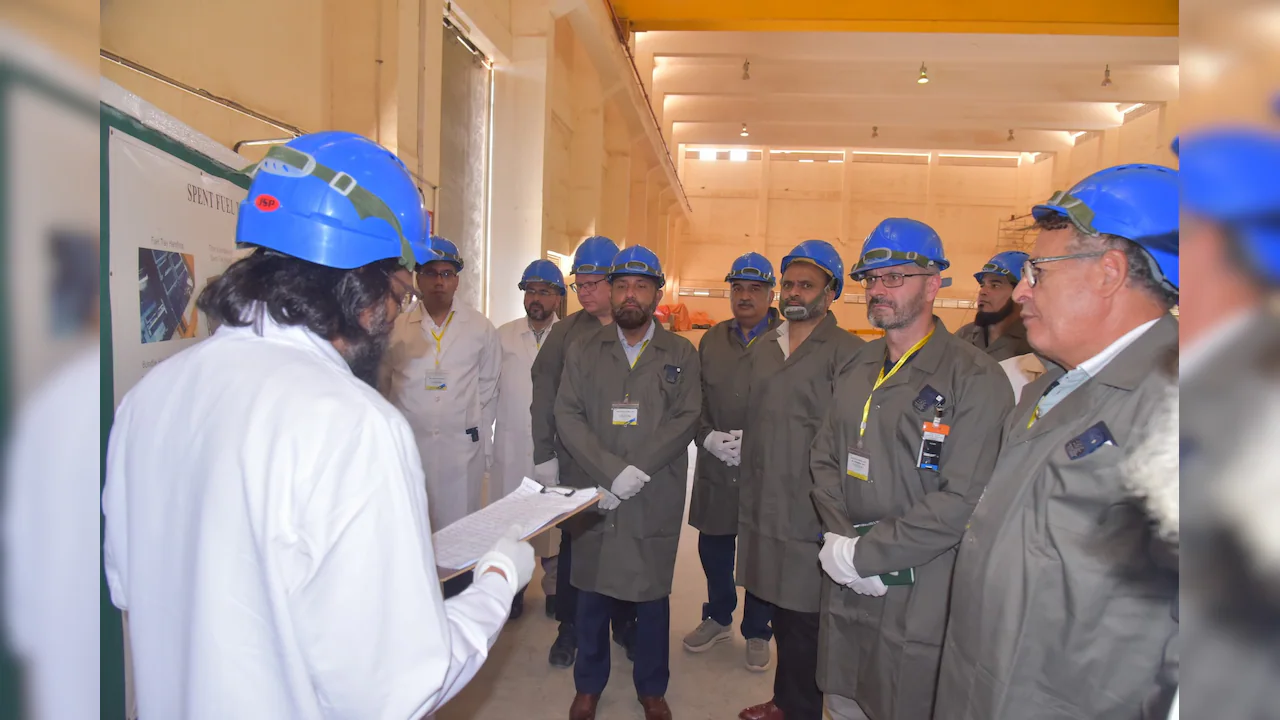
It was the first IPPAS mission ever hosted by Pakistan. The findings in a statement were welcomed by senior IAEA officials. She also praised Pakistan’s contribution to training and developing the nuclear security workforce. Pakistan’s nuclear regulators similarly hailed the review as international validation of their security measures. The IPPAS mission did not inspect Pakistan’s nuclear weapons facilities. Such facilities remain outside the scope of the review. Pakistan is not a signatory to the Nuclear Non-Proliferation Treaty as a nuclear weapons state, and its strategic nuclear assets are not subject to IAEA safeguards and inspection in the manner applied to civilian facilities in many other countries. The mission instead focused on nuclear security arrangements associated with civilian nuclear materials, facilities and regulatory structures reviewed under the agreed scope of the visit.
The 12-day IPPAS mission was conducted at the request of the Government of Pakistan between September 28 and October 9, 2026, according to the IAEA. Pakistan’s, nuclear power is provided by six atomic reactors in two commercial nuclear power plant sites with a net capacity of 3,545 MW, according to estimates.
Karine Herviou, IAEA Deputy Director General and Head of the Department of Nuclear Safety and Security, said the successful completion of the first IPPAS mission demonstrated Pakistan’s commitment to enhancing regulatory and operational aspects of its nuclear security regime. As Ambassador Rakesh Sood observed, the legacy of the “Nuclear Walmart” continues to cast a long shadow over Pakistan’s nuclear reputation, even as the IAEA says the country has established a robust nuclear security regime for protecting nuclear material and civilian nuclear facilities.
