
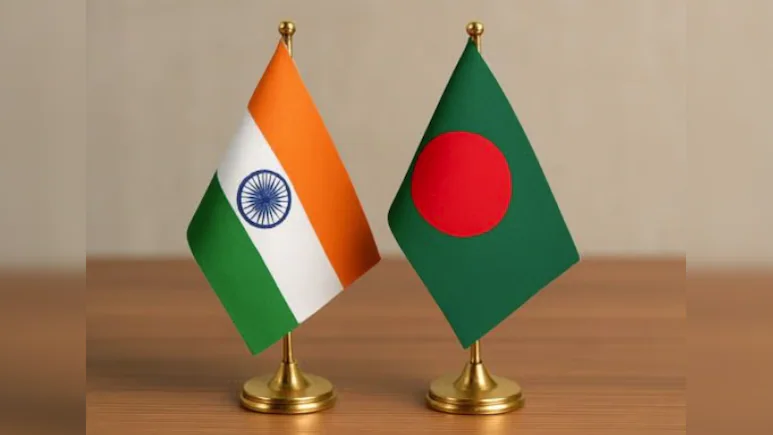
More than a month has gone by, and India still hasn’t given the green light to Bangladesh’s choice for its next High Commissioner. It is just the latest wrinkle in a relationship that has been anything but smooth lately.
Dhaka wants to send Foreign Secretary Asad Alam Siam to New Delhi for the post. But before that can happen, India needs to grant what’s called an agreement, which is basically formal sign-off from the host country. That approval still hasn’t come.
Siam isn’t a fresh face. Before that, he was Bangladesh’s ambassador in Washington. Without India’s approval, though, Dhaka simply can’t make his new posting official. The interim government that followed leaned harder toward China and Pakistan, and that didn’t go down well in New Delhi. When Rahman came to power, there was genuine optimism that things might reset. Some progress did follow. But old tensions and political sensitivities keep getting in the way of anything resembling real stability. In just the past month alone, India has extended two separate invitations to Rahman. One was for a state visit, the other for the BRICS summit. Neither happened. Now the pending approval for Siam adds one more question mark to an already messy picture. Both sides are still talking, through technical meetings and working groups that keep chugging along.
Relations took a real nosedive after Hasina’s ouster in 2024.
But the fact that Delhi hasn’t cleared Dhaka’s pick for its top diplomatic post says a lot about how far apart the two countries still are.
He is a veteran career diplomat who took over as Foreign Secretary last year under the interim government led by Muhammad Yunus.
Diplomatic Ties Still Strained, India Yet To Approve Next Bangladesh Envoy
The timing makes this trickier. Current High Commissioner M. Riaz Hamidullah is on his way out. He’s expected to head to Geneva around mid-October to take up a new role as Bangladesh’s Permanent Representative to the UN. So the seat in New Delhi needs filling, and fairly soon. What Is An Agreement? Under the Vienna Convention on Diplomatic Relations, no country can just install its pick of ambassador or high commissioner somewhere else. The receiving nation has to approve it first. Most countries keep this whole process quiet. Nobody wants a private diplomatic snag turning into a public argument. So technically, India sitting on Siam’s approval isn’t a rejection. But given everything else happening between the two countries right now, it is hard not to read something into it. A Cancelled Visit, A Missed Summit Things had looked like they were turning a corner after Tarique Rahman took office. That hope has cooled off fast in recent weeks. Rahman was supposed to visit New Delhi in August. That trip got cancelled at the last minute. India had also asked him to attend the BRICS Leaders’ Summit in New Delhi, in his role as chair of BIMSTEC, the regional grouping covering the Bay of Bengal. He skipped that too, and Bangladesh didn’t send anyone else in his place. Even Hamidullah, who’s technically still Bangladesh’s man in Delhi, was a no-show. Still Talking, Just Not At Top It is not all frozen, though. Lower down, the cooperation is still ticking along fine. Just last week, officials from both countries met in Dhaka for a two day session on railway connectivity, working through details on cross border train operations. Over the past seven months or so, several technical working groups have been dusted off and restarted too. That is a sign that whatever is happening at the political level, both governments still want the everyday machinery of cooperation running underneath it. India has made its own gesture as well. He took up the post at the end of June, and his position now carries Cabinet rank, which is a fairly clear signal of how seriously India is treating this relationship, at least on paper. From Thaw To Freeze, Again?
All this comes on top of fresh friction over Sheikh Hasina, the former prime minister who fled to India after being ousted in August 2024 and has been there ever since.
And here’s the thing: it doesn’t even have to explain itself if it says no, or it can just stay silent.
Earlier this year, it appointed Dinesh Trivedi, a former Union minister, as its High Commissioner to Dhaka.
