
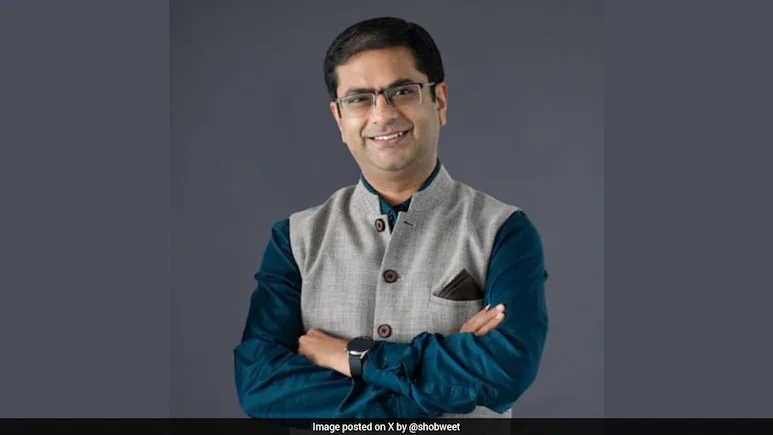
Amazon had been losing money for a decade when it took on Shobhit Mathur. He remembers it that way, and he is now using that memory to challenge a new round of US immigration curbs.
It could, however, affect the permanent residency process for eligible employees. Mathur did not claim the H-1B system is perfect. “There are challenges in the H-1B system.
India’s Ministry of External Affairs (MEA) issued a statement on October 9.
It said PERM is separate from the H-1B visa programme, and that the suspension does not by itself affect existing H-1B visas or the status of holders and their dependants. The ministry also objected strongly to US Vice-President JD Vance’s description of foreign workers as “indentured servants”, calling the term deeply offensive. It said Indian professionals are highly educated and skilled, and that their work benefits both countries through research, productivity, innovation, competitiveness and job creation. I will not deny that there is no fraud,” he said. “But you can’t paint the entire programme with a single brush.”
Mathur’s comments follow a widely shared post on X. In it, he said Indian professionals on H-1B visas were part of the early team that built Amazon Web Services (AWS). His argument is that political rhetoric and tighter rules cannot erase what immigrant talent has added to American innovation.
He challenged the Trump administration’s restrictions on green card pathways for employees of major technology companies, arguing that America risks turning its back on the very immigrants who helped build its technology empire. Mathur’s comments follow a widely shared post on X. His argument is that political rhetoric and tighter rules cannot erase what immigrant talent has added to American innovation. He was careful about how much credit to claim. “Am I taking credit for that? I’m definitely saying that we had a role to play. Of course, it’s not a single person or a team that does this, but the Indian Americans in the US had a very important role to play at that point of time, and that cannot be denied. His post also pointed to what Amazon’s growth has meant for Seattle’s skyline and for founder Jeff Bezos’s wealth. The row follows a US decision to suspend Permanent Labour Certification (PERM) applications for staff at eight major technology companies, among them Indian IT firms. The move has raised questions over green card routes for eligible foreign professionals at those employers. Mathur backed India’s stance and pointed to what the phrase recalls. “These people who have helped build your country as well, along with, of course, Americans, you can’t call them indentured servants. He suggested domestic politics may be shaping the language, with the US midterm elections approaching. His bigger worry is elsewhere. He noted that Satya Nadella and Sundar Pichai, both of Indian origin, lead major technology companies, and saw this as proof of what global talent has done for American tech. The dispute also touches on trade talks between India and the US. Mathur supported New Delhi’s push to sign trade deals with other countries. For Mathur, the deeper question is whether India can keep its own best minds. He believes the US is becoming harder to predict for ambitious workers. He wants India to put money into higher education, strengthen its technology ecosystem, make doing business easier, and improve city infrastructure, so young professionals have better prospects and a better quality of life at home. “If you’re looking at the long term, India is a better bet. His takeaway from his Amazon years is that innovation tends to thrive where countries draw talent in rather than play down its contribution.
He spoke to NDTV’s Foreign Affairs Editor Aditya Raj Kaul about his time at the company between 2005 and 2009, when the company was still navigating difficult early years and laying the foundations for what would become one of the world’s most influential technology businesses.
“When Amazon hired me on an H-1B visa, Amazon was making losses for 10 straight years,” said Mathur, co-founder and vice-chancellor of Rishihood University. In it, he said Indian professionals on H-1B visas were part of the early team that built Amazon Web Services (AWS). “Fundamental technology of Amazon got built in those four, five years, which eventually made Amazon the big tech company from an e-commerce company to a technology company,” he told NDTV. “Is Amazon forgetting that or is the US forgetting that and kicking the ladder now?” he asked. “Using that terminology in today’s times is definitely, I think, not the right use of the language,” he told NDTV. “I fear more for the people who are living there,” he said, speaking of Indian Americans who could face hostility as anti-immigrant messaging grows. “India is doing the right thing by signing multiple FTAs or treaties with other countries because we always have to hedge our bets,” he said. “America as a land of opportunities, it’s obvious that the doors are closing,” he said. It’s your home,” he said.
