
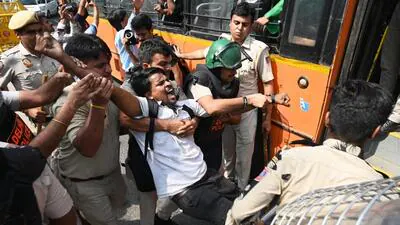
The Press Council of India (PCI), a statutory and quasi-judicial body meant to preserve press freedom, has issued guidelines for journalists covering protests, emphasising professional conduct, crowd safety, ethical reporting and coordination with newsrooms and law enforcement agencies.
It emphasised professional neutrality and asked journalists not to participate in demonstrations, take sides, provoke confrontations or interfere with protesters, counterprotesters or police. The PCI asked journalists to maintain a reasonable distance from confrontations, particularly when tensions escalate, or police action is anticipated. It added that in areas affected by smoke or tear gas, they should use visible landmarks and safe routes to leave without moving deeper into the crowd. It cautioned against touching or moving tear-gas canisters, flash bang devices or smoke grenades. The council has called for accurate, objective and impartial coverage, verification through multiple sources and equal scrutiny of claims made by protesters, organisers, police and government authorities. It asked journalists to distinguish verified facts from allegations and opinions, avoid revealing sensitive police movements in real time, and protect the privacy of minors, injured people and vulnerable individuals.
The PCI, which has jurisdiction only over print media under the Press Council Act of 1978, has advised journalists to secure their identity cards and lanyards carefully to prevent entanglement during crowd movement or confrontations.
It said they should avoid attaching cameras or recording equipment to police barricades, vehicles, or other equipment in ways that could obstruct movement or cause damage. The PCI said journalists should monitor changes in crowd behaviour, identify nearby exits, open streets and safe locations, and revise their escape routes as conditions change. The PCI said suitable protective headgear and body armour may be considered depending on the assessed threat.
