
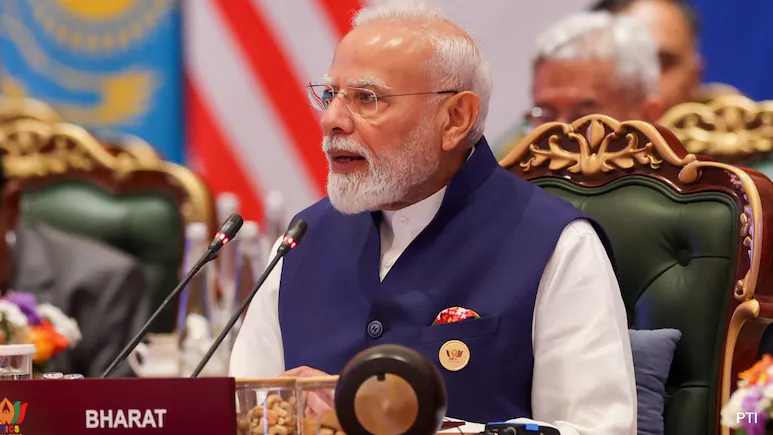
Prime Minister Narendra Modi is set to mark a significant milestone in his political career, completing 25 years in public life next month. His journey began as the Chief Minister of Gujarat, a role he held from 2001 until 2014. Since then, he has been at the helm of the BJP-led Central government, steering national policies and initiatives.
The programme also reported environmental benefits. Soil and groundwater in villages with complete toilet coverage were found to have lower contamination compared with villages where toilet coverage was incomplete. Because of fewer illnesses and lower spending on healthcare and treatment, toilets were also built in schools, anganwadi centres, healthcare facilities, government buildings and other public places According to UNICEF estimates , households in open defecation-free villages could save up to Rs 50,000 a year.
The Swachh Bharat Mission (SBM) was launched in 2014 with the target of making India open defecation-free within five years. When the scheme started in 2014, only 39% of rural households had sanitation coverage. By 2019, the coverage had increased to 100%, with more than 10 crore individual household toilets built under the first phase of the mission. As of March 17, 2025, India had 5,86,788 villages covered under the programme. Of these, 5,64,096 villages had declared themselves ODF Plus, according to PIB . Around 5,03,585 villages have been covered by solid waste management, while 5,22,462 villages have been covered by liquid waste management. The government also trained more than 600,000 swachhagrahis, or community volunteers, to spread awareness about sanitation. The benefits were estimated to be 4.7 times higher than the costs, according to the UN. SBM was also estimated to have created the equivalent of 7.5 million full-time jobs. The government expanded the scheme further to cover all senior citizens aged 70 years and above, which now covers around 6 crore senior citizens from 4.5 crore families. As of June 30, 2026, the scheme had authorised 29.05 lakh inter-state hospital admissions, involving more than Rs 8,383.97 crore. The Digital India Programme was launched in 2015 to make government services more accessible through technology and reduce the digital divide between people in cities and rural areas. Under BharatNet, around 2.15 lakh Gram Panchayats, or nearly 97% of the target, had been connected by January 2026, with nearly 7 lakh km of optical fibre cable laid across the country.
