
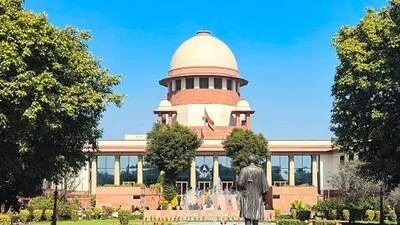
The Supreme Court has ruled that a two-year-old boy in Telangana must be handed over to his adoptive parents. The court stated that the biological mother’s financial difficulties in relinquishing her child do not alone justify a presumption of child sale. Importantly, the ruling clarifies that it does not impede ongoing investigations into a suspected inter-state child trafficking network involving other minors.
The couple cared for the child, vaccinated him regularly, celebrated his first birthday, and enrolled him in the Aadhaar database. Challenging this judgment, they appealed to the top court. The two-year-old boy’s mother, a single parent, gave the child to a married couple soon after his birth in April 2024. However, the state’s Child Welfare Committee (CWC) forcibly took the child away in February 2025, prompting the couple to approach the court. The couple initially approached the high court, which refused to release the child in June 2025.
Child Custody Case Linked to Child Trafficking Allegations
The Telangana government, through advocate Sravan Kumar Karanam, argued in court that the child’s release would not serve his best interests. This case is not merely a custody issue; it is connected to a broader, organized inter-state child trafficking network. The government views the situation as part of a larger problem that requires careful legal consideration and intervention.
The police investigation, as submitted by the state to the court, revealed that the network operated beyond Telangana, extending as far as Gujarat, Maharashtra, Karnataka and Tamil Nadu. The court noted the facts of the case, which showed the duty of care and responsibility shown by the child’s adoptive parents. The court set aside the high court order and directed the Shishu Griha, Hyderabad, to hand over the child’s custody to the adoptive parents. The bench clarified that its order was limited to the case of one child and did not touch upon the issues relating to the “pending investigations concerning other children who are alleged to have been trafficked.
The high court had turned down the petition of the adoptive parents on the ground that the adoption deed through which the child was taken in adoption was neither in accordance with the Juvenile Justice (Care and Protection of Children) Act, 2015, nor executed through the Central Adoption Resource Authority (CARA). It further noted the pending investigations and said that the minor child would be safe in the custody of the CWC within the framework laid down under the 2015 Act.
The bench said, “The child was taken into custody by the adoptive parents and it is not a case where the child was not taken due care of by his adoptive parents. The adoptive parents in the present case had admitted to paying ₹ 6 lakh to procure the infant through one “Vijayalaxmi”, who was stated to be part of the trafficking chain, the state said.
