
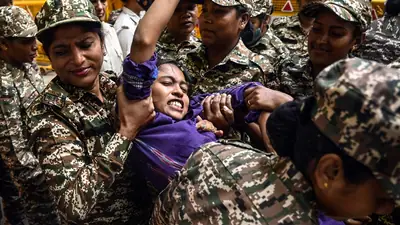
United Nations’ experts have criticised the Indian police’s “heavy-handed” response to youth-led protests in Delhi and elsewhere over the past three months, urging authorities to protect peaceful agitations and ensure justice for alleged rights violations during these and earlier demonstrations.
Most of those held were released late that night. It also sought an independent, impartial and thorough investigation into the conduct of the police and affiliated forces, to be launched without delay. On the ground, the numbers are large. Their phones were allegedly seized and protest-related material deleted. The statement did not mention whether the experts’ count covers a longer period or several protest days. The experts also took aim at the legal tools used to manage the protests. They added that any restriction on assembly must be legal, serve a legitimate aim, and be necessary and proportionate. The call adds to international scrutiny that has followed the protests. With protest groups vowing to continue until the electoral system is reformed, the standoff shows no sign of easing. Both the street movement and the government now face a test of how far the right to assemble can be stretched, and how far it can be curbed.
The experts said over 7,000 youths, journalists, human rights defenders, lawyers and members of political parties were recently detained in the Capital and taken to remote detention centres. Most, including protest leaders, were freed 24 hours later. The figure is more than three times the over 2,000 detentions that the police reportedly made on October 10, when large parts of central Delhi were locked down. They said section 163 of the Bharatiya Nagarik Suraksha Sanhita, India’s criminal procedure code, was invoked reportedly to impose broad bans on gatherings, suspend public transport and shut down the internet. To be sure, the police used the provision to bar gatherings of five or more people in parts of the capital on October 10. The UN human rights office has already urged India to release people it described as arbitrarily detained, and opposition parties marched towards the Supreme Court on October 12 to press the demand for Kumar’s exit.
“These actions violate India’s core international legal obligations, including the rights to freedom of peaceful assembly, freedom of expression, liberty, security of the person, and the right to defend human rights,” the experts said. The probe, the experts said, must ensure full accountability, justice and reparations for victims.
